Recovery Blog
Evidence-based articles organized by condition. Prefer structure? Start from each condition’s learning hub, or browse everything below.
Browse by condition
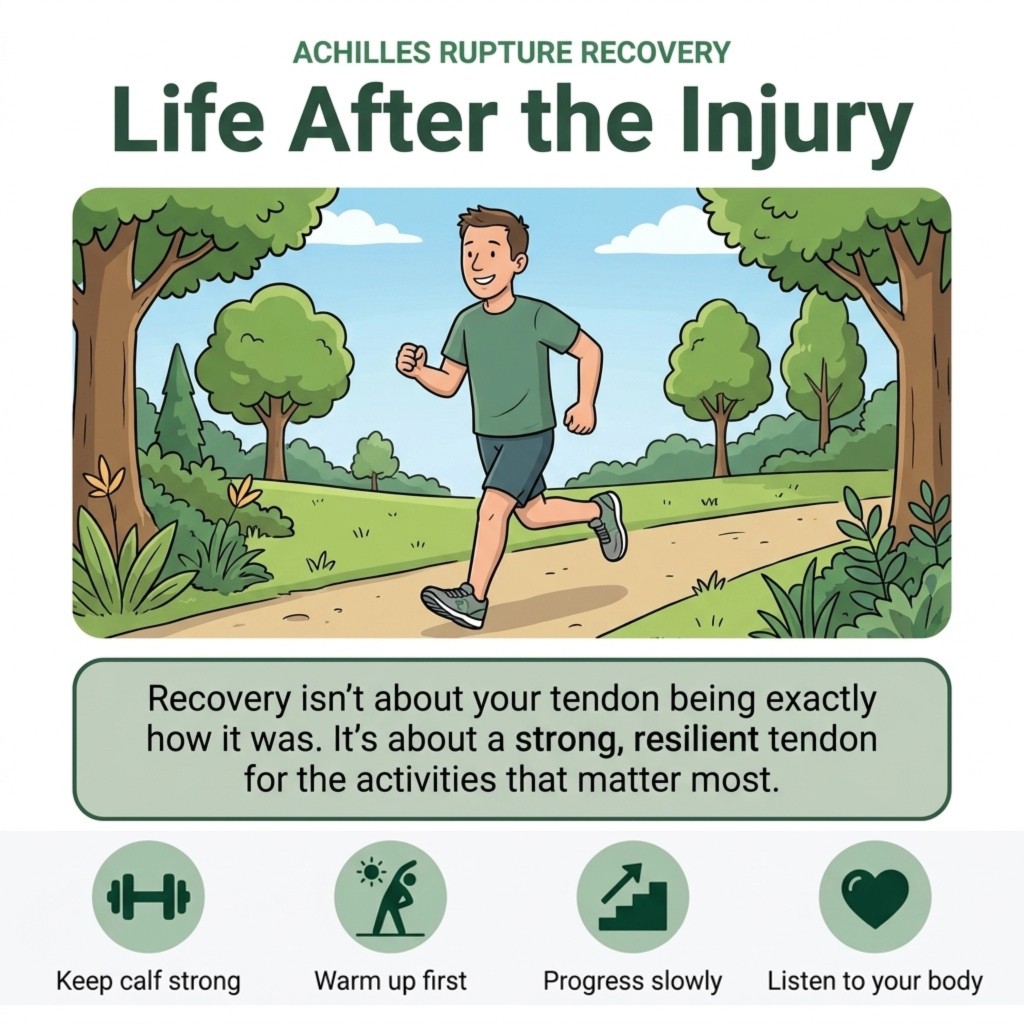
Life After Achilles Rupture: What to Expect
Life after Achilles rupture: normal long-term changes like tendon thickening and calf asymmetry, plus habits that keep you strong and active for years.
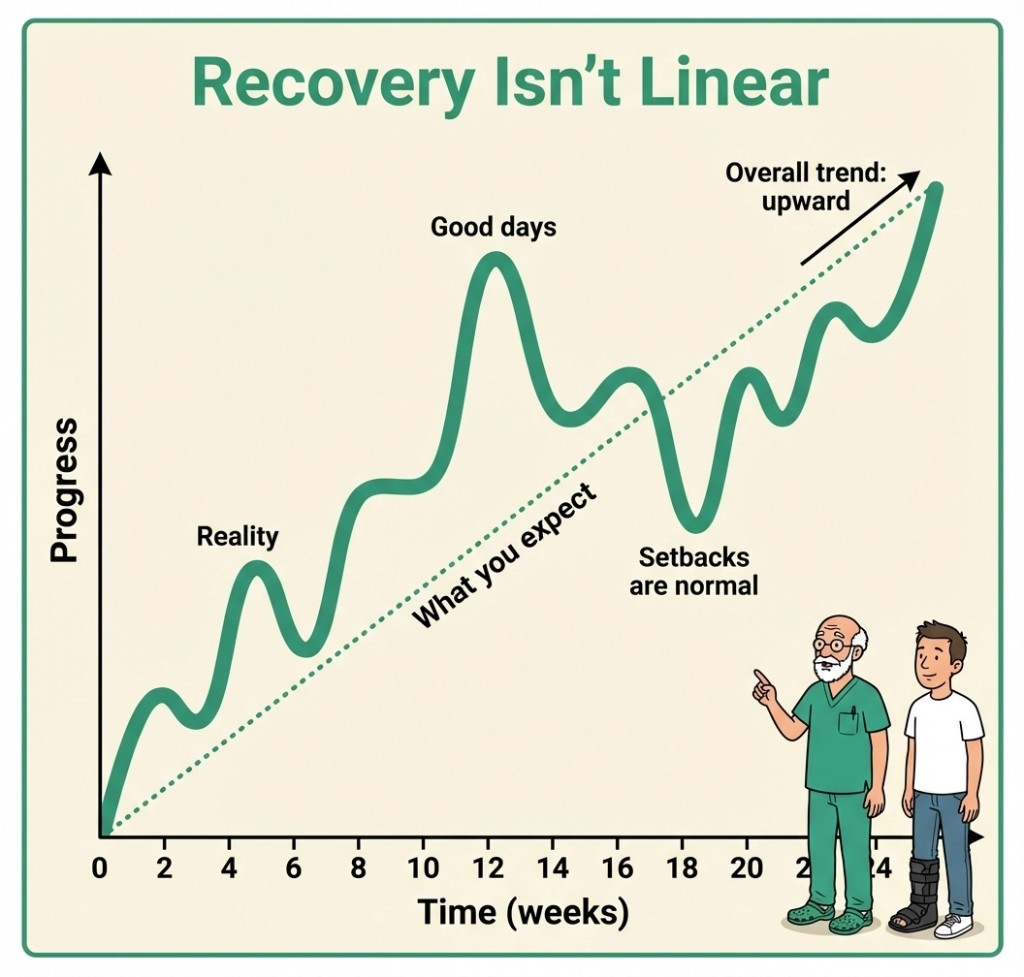
Achilles Recovery When Progress Feels Slow
Achilles rupture recovery is rarely linear. Learn why plateaus happen, what setbacks are normal, and when slow progress needs physiotherapy review.
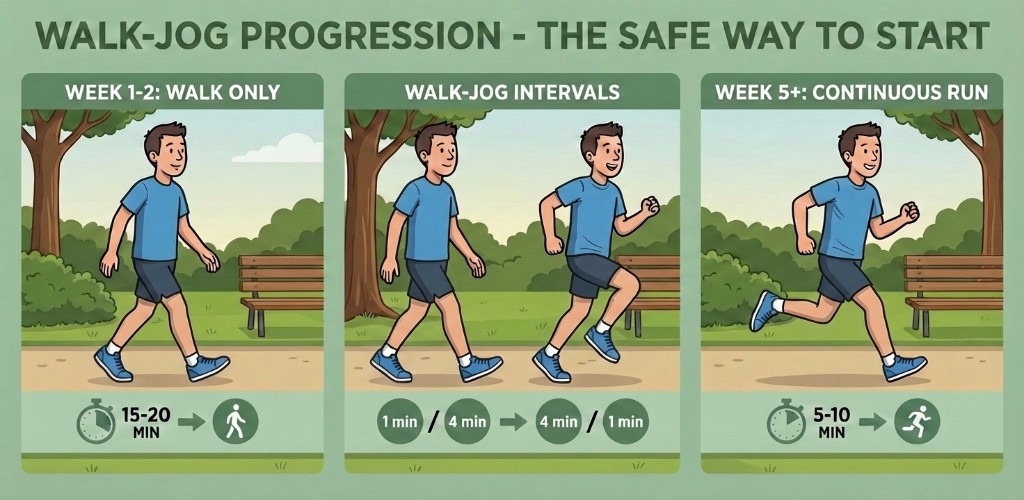
Walk-Jog Progression After Achilles Rupture
Walk-jog progression after Achilles rupture: criteria to start, a week-by-week plan from fast walking to short runs, and when to stop if symptoms flare.
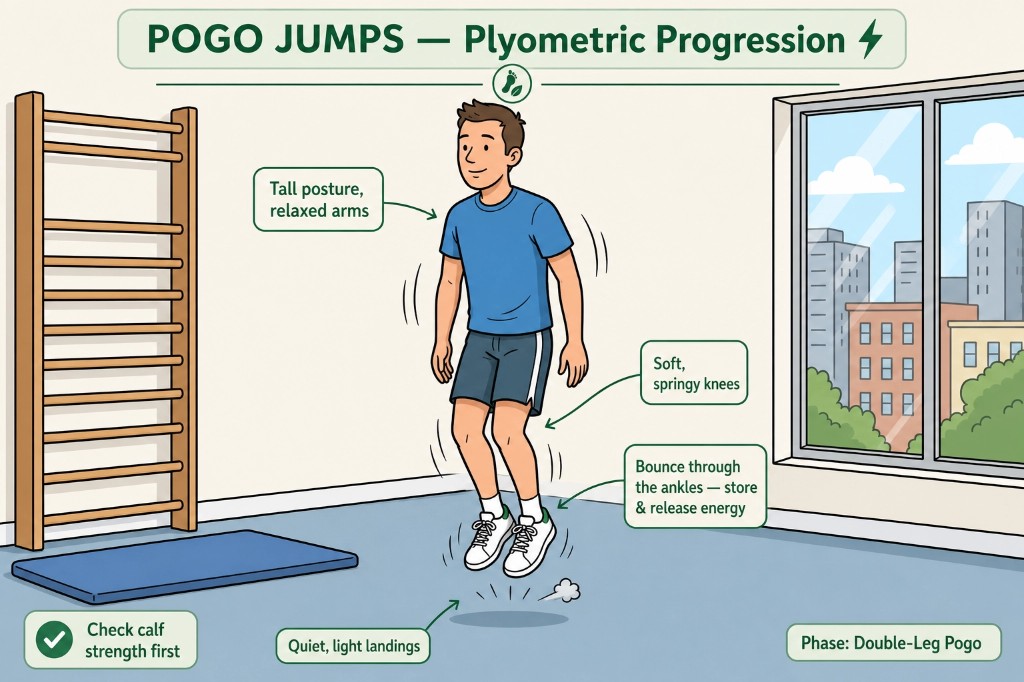
Plyometrics After Achilles Rupture: Safe Guide
Plyometric exercises after Achilles rupture rebuild power safely. Learn when to start pogo jumps, hopping progressions, and warning signs to watch for.
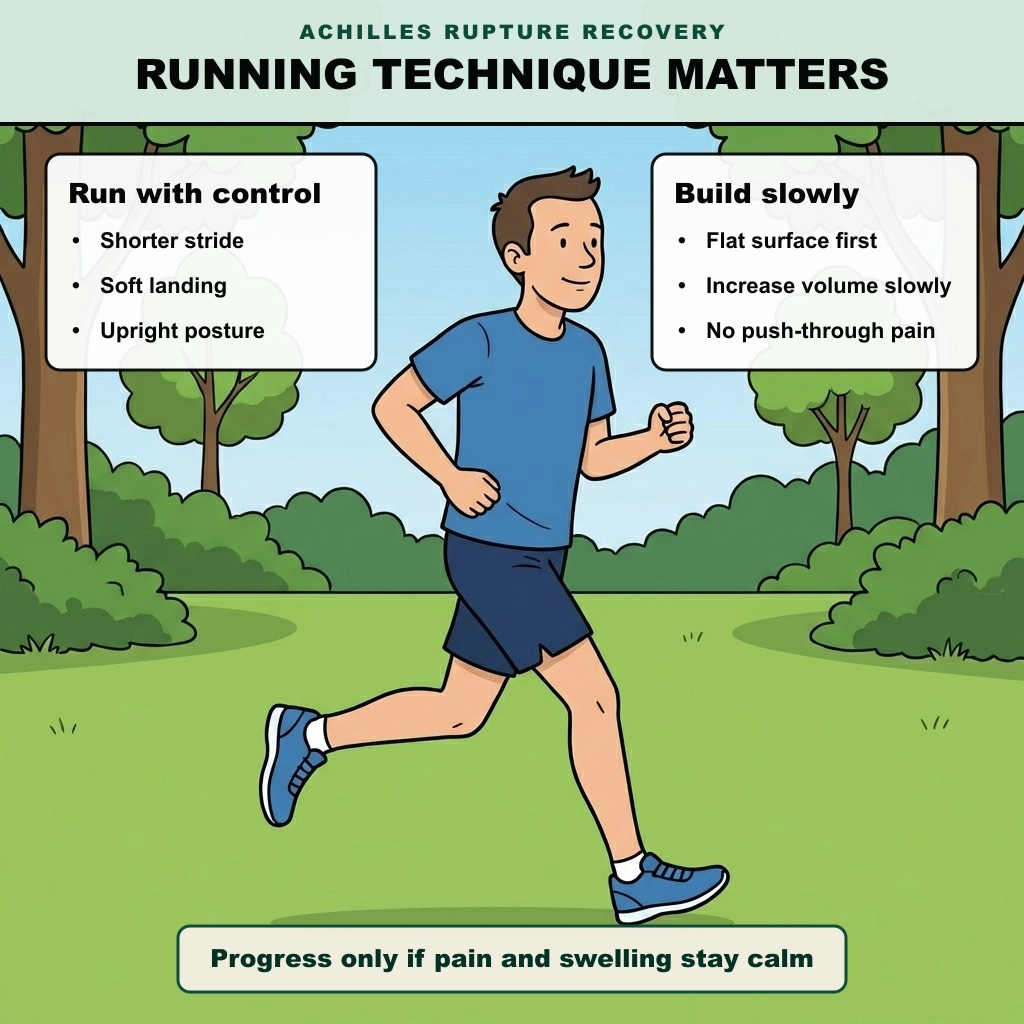
Return to Running After Achilles Rupture
Return to running after Achilles rupture takes criteria, technique, and patience. Learn stride control, surface choice, and safe volume progressions for your tendon.
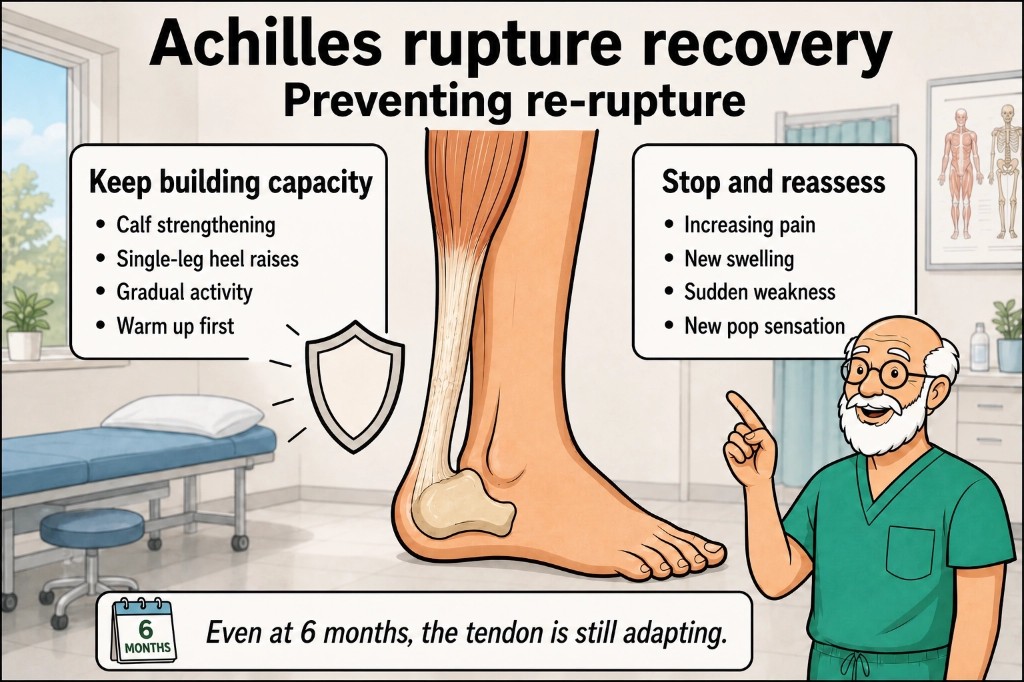
Achilles Re-Rupture Prevention After Recovery
Achilles re-rupture prevention after recovery: how to build tendon capacity, avoid sudden load spikes, and spot warning signs early.
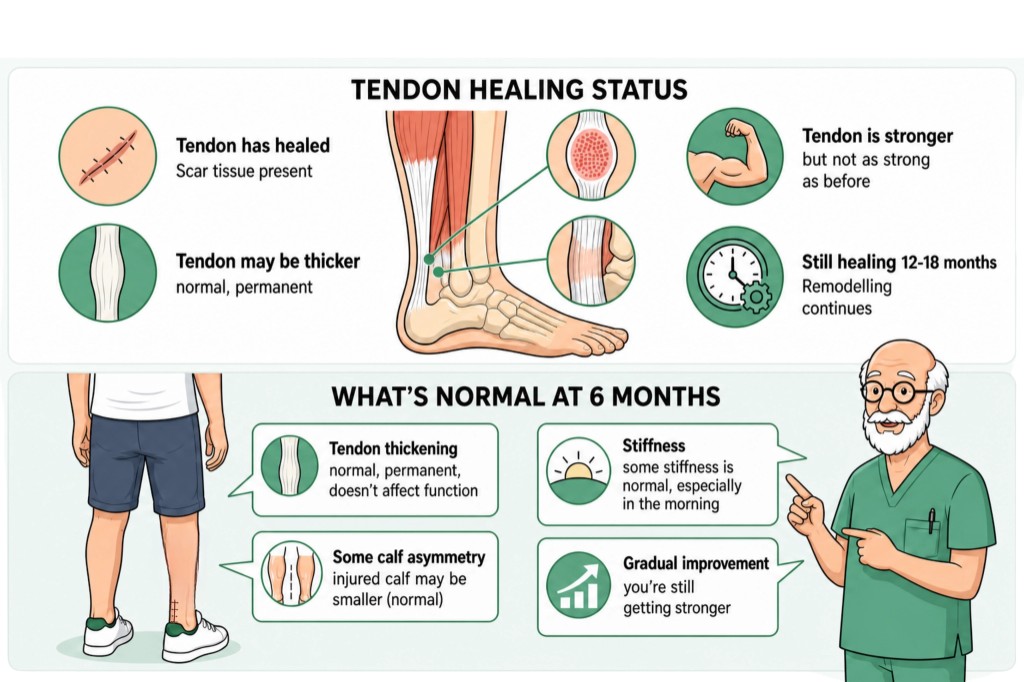
Achilles Rupture Recovery at 6 Months
Achilles rupture recovery at 6 months: what is normal, why weakness and stiffness can persist, and which milestones matter before sport.
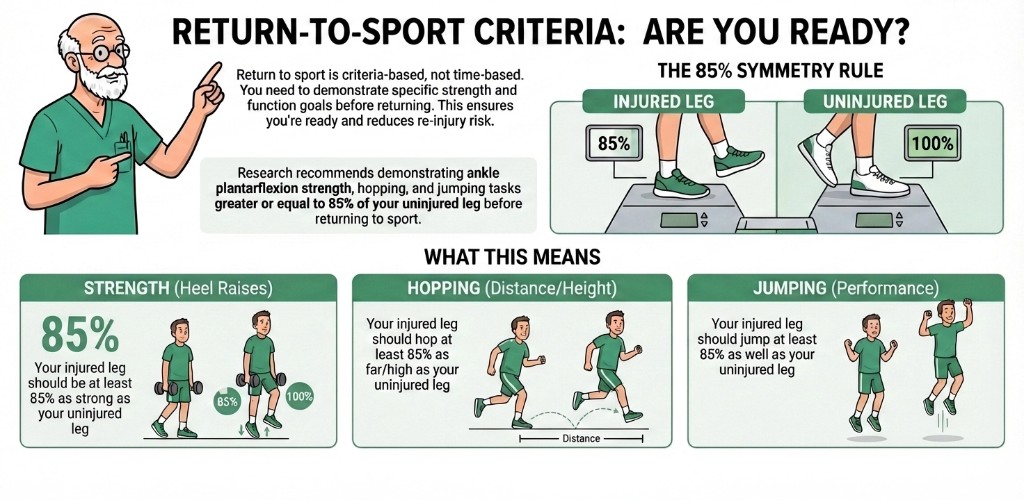
Return to Sport After Achilles Rupture
Return to sport after Achilles rupture is criteria-based, not time-based. Learn the 85% symmetry rule, hopping tests, and strength benchmarks before clearance.
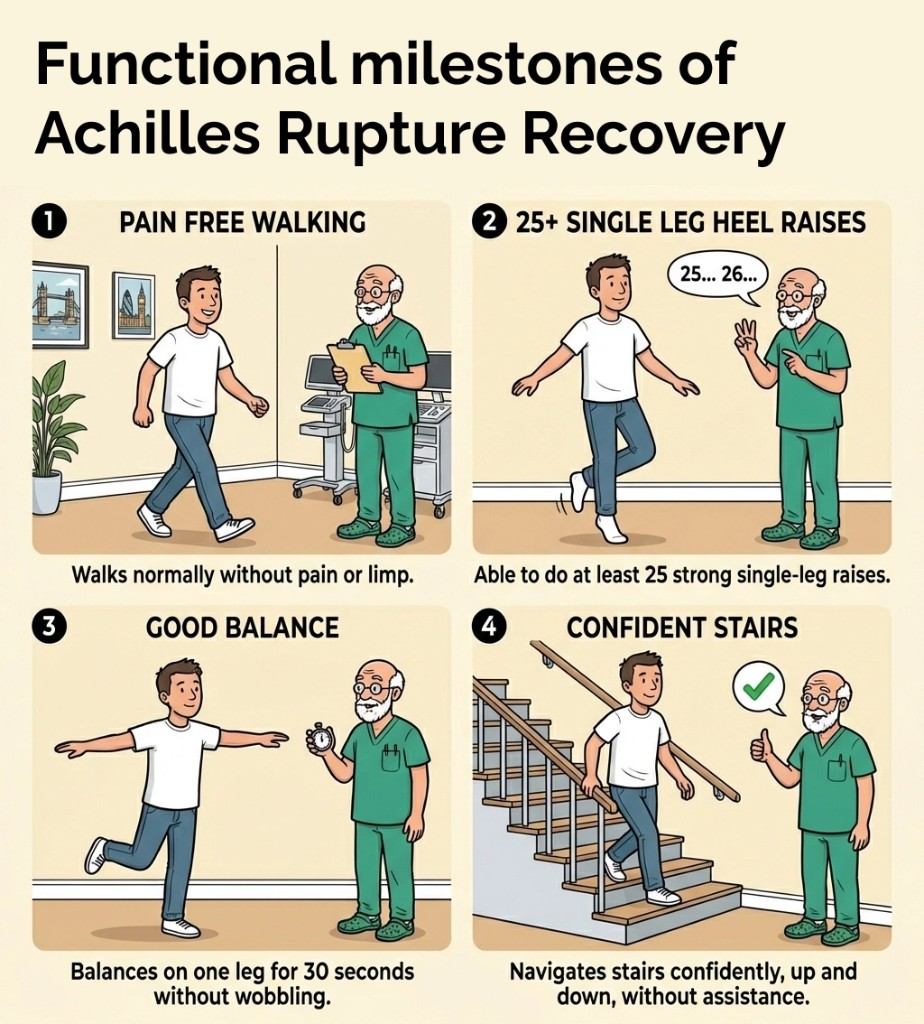
Achilles Rupture Recovery Milestones That Matter
Achilles rupture recovery milestones: pain-free walking, 25+ single-leg heel raises, balance, stairs, and confidence in late-stage rehab.
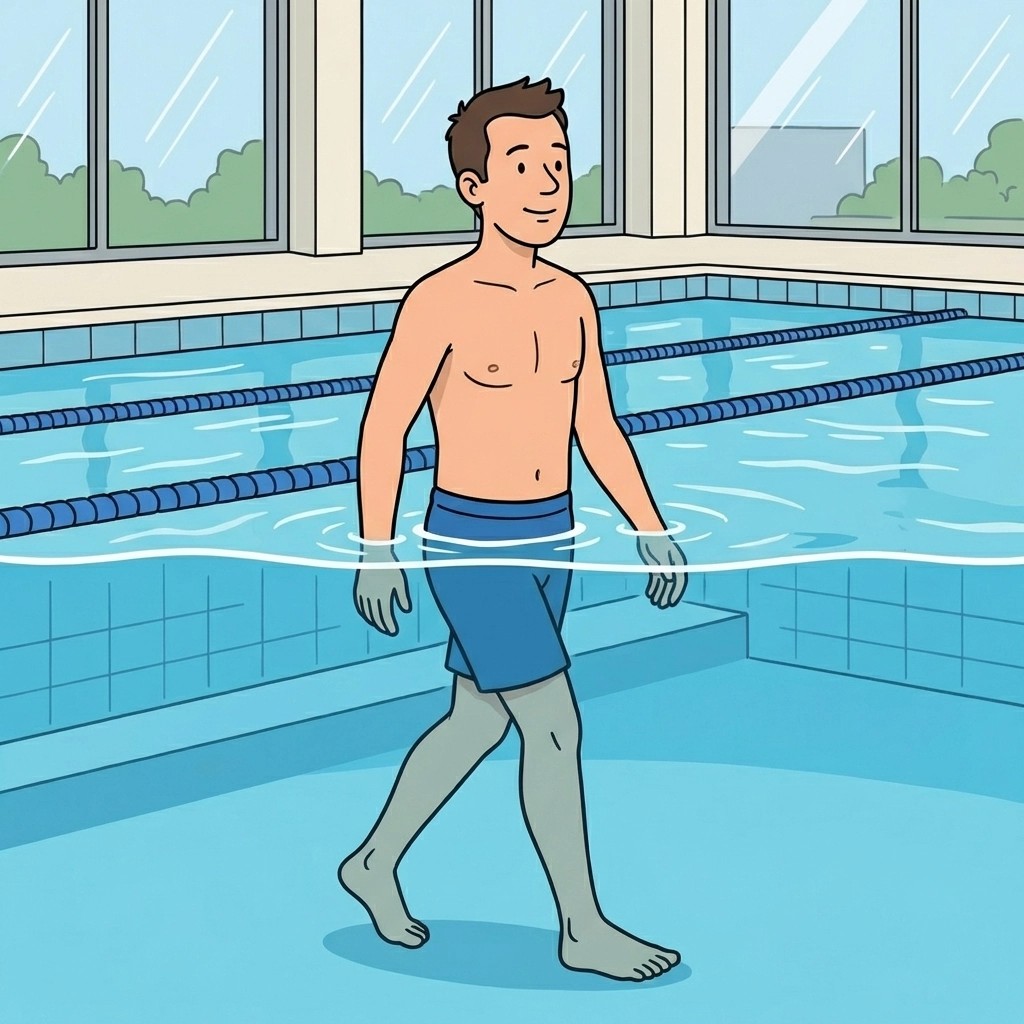
Cardio After Achilles Rupture: Safer Options
Cardio after Achilles rupture should be low impact and controlled. Learn how swimming, pool walking, cycling, elliptical and walking fit recovery.
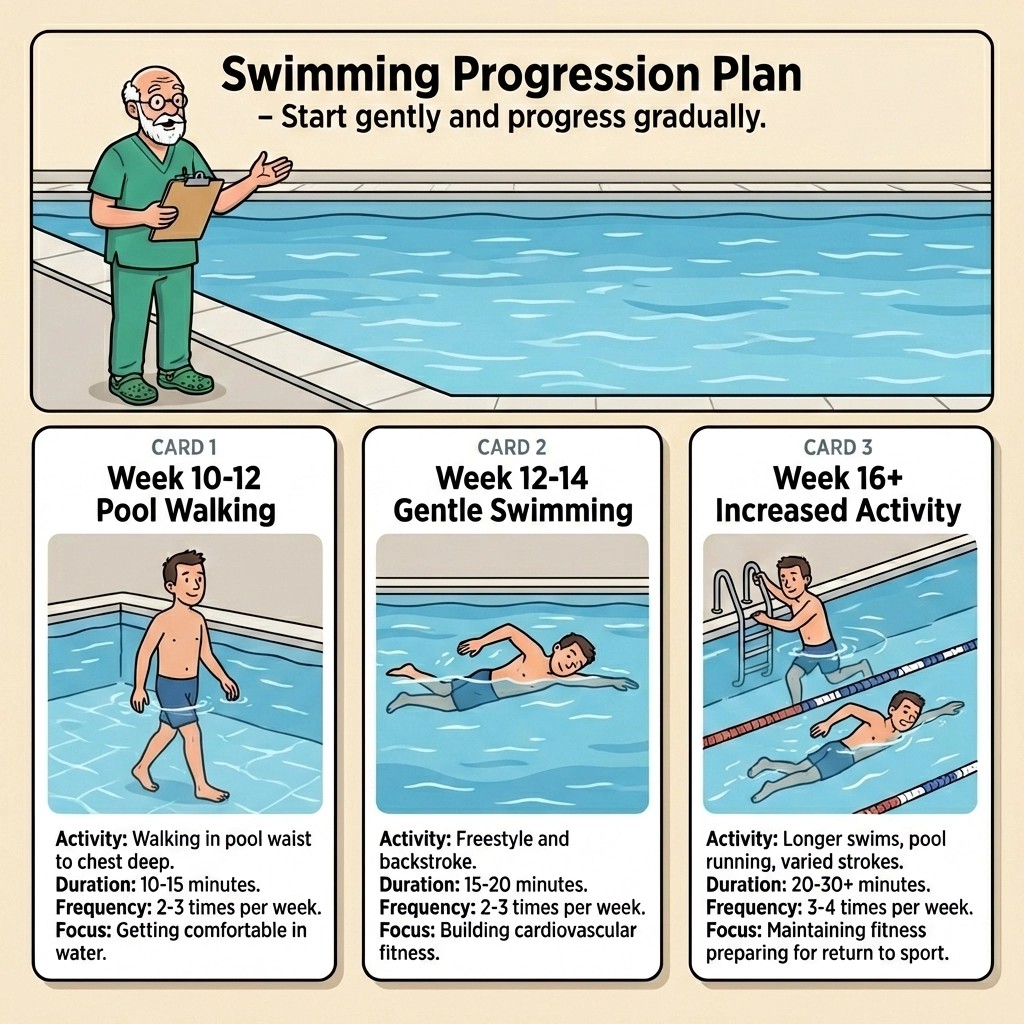
Pool Progression After Achilles Rupture
Pool progression after Achilles rupture should be gradual. Learn how pool walking, gentle swimming and increased activity may fit weeks 10-16+.
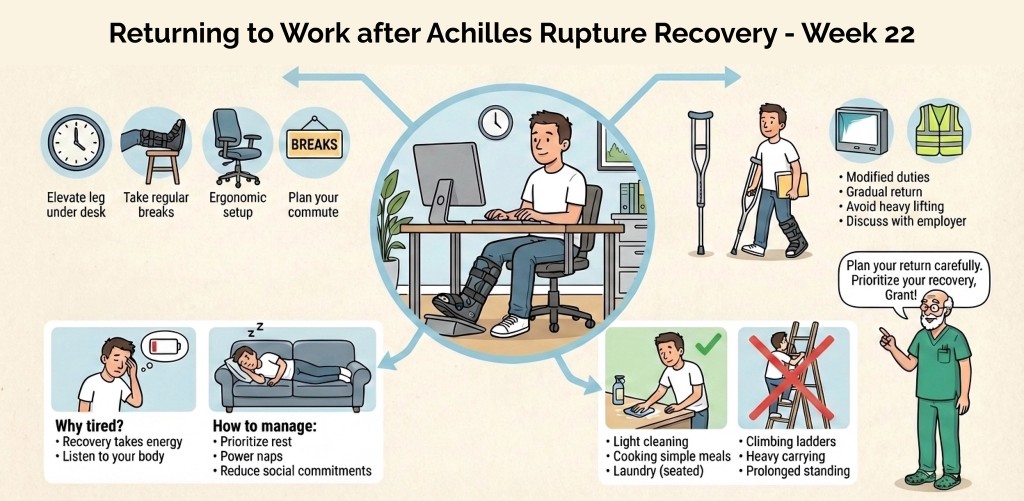
Returning to Work After Achilles Rupture
Returning to work after Achilles rupture depends on job demands, commuting, fatigue, and pacing. Learn practical adjustments for daily life.
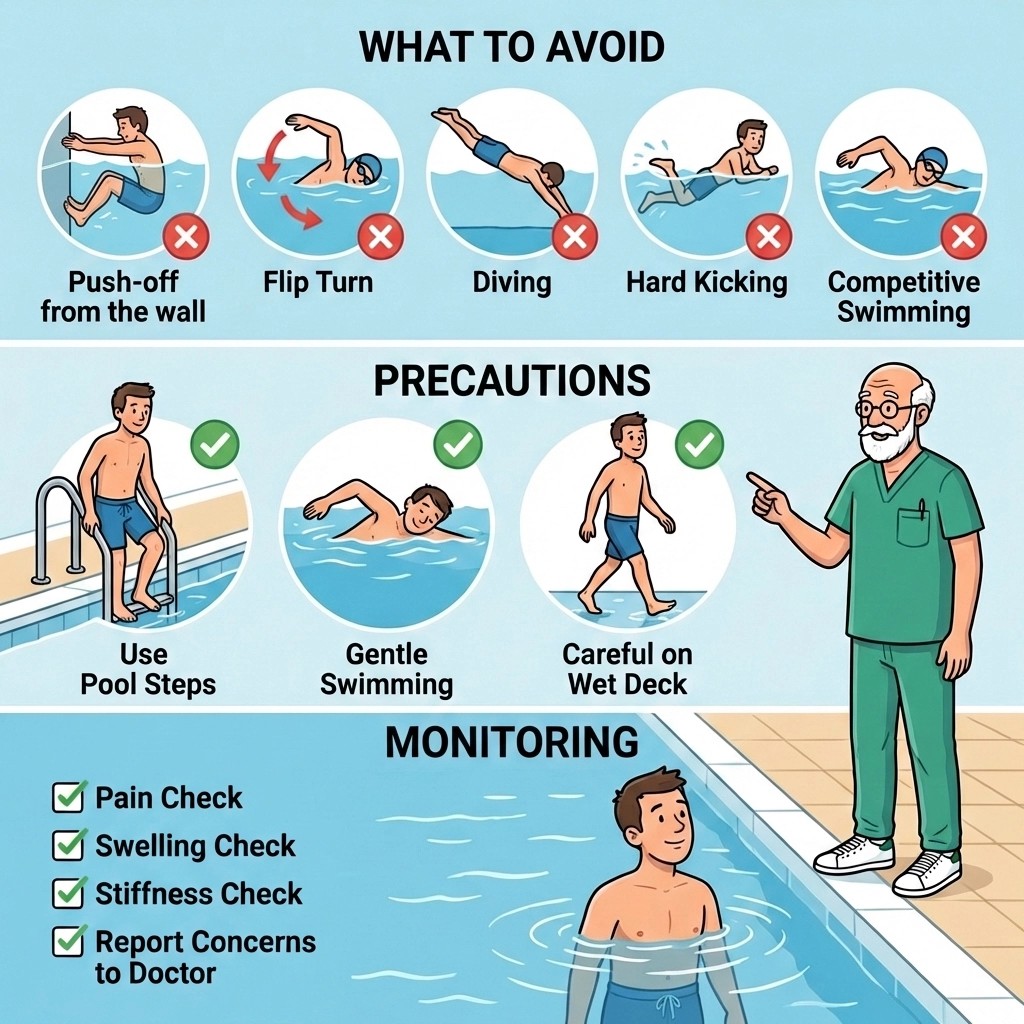
Swimming After Achilles Rupture: What to Avoid
Swimming after Achilles rupture can help recovery, but low impact is not no load. Learn what to avoid, key precautions, and warning signs.
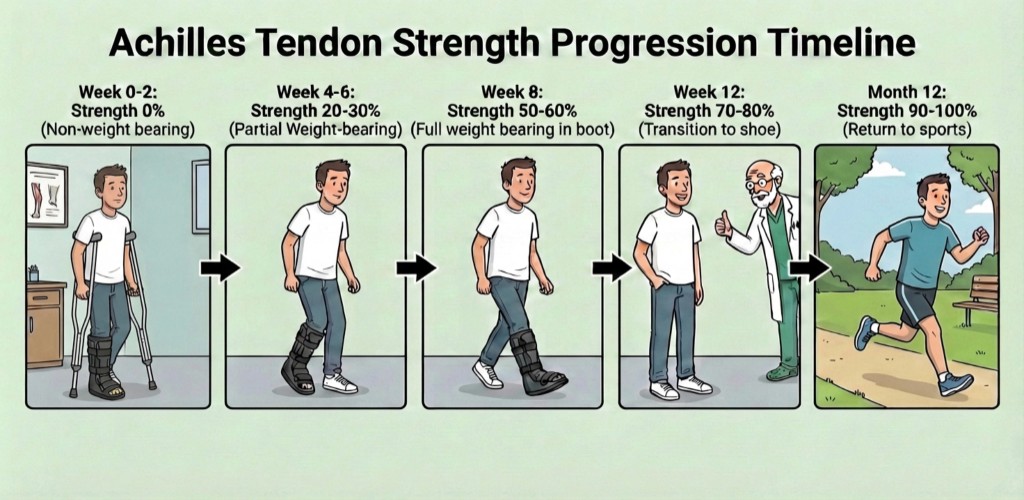
Walking Boot Removal: Strength Matters More Than the Date
When to remove your Achilles rupture boot: why protected gait isn't like normal shoes, why week‑8 still needs the boot on many pathways, and how criteria—not only calendars—guide safe weaning.
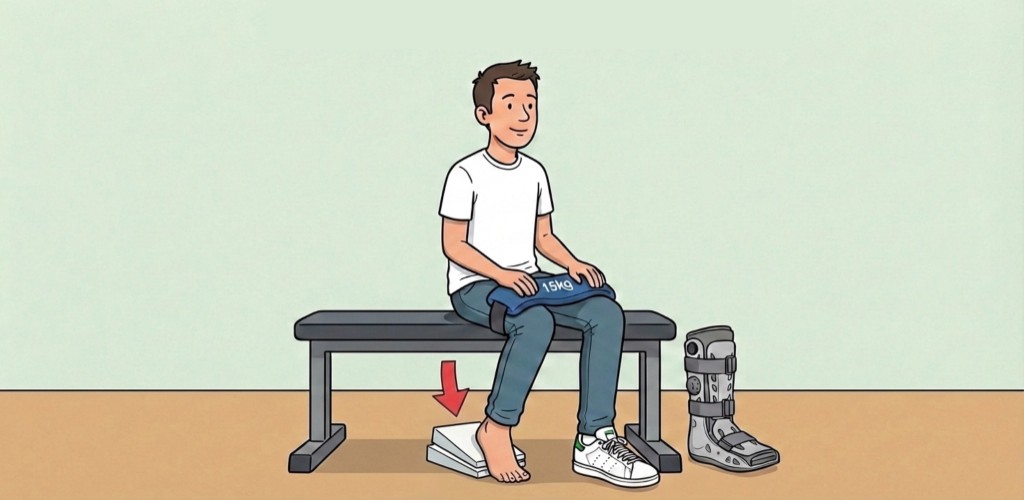
Week 6 Achilles Rehab: Protected Seated Calf Raises
Around week 6 many teams add seated calf raises in plantarflexion (toes down) with a heel wedge—not gym ‘max outs.’ How to load safely after an Achilles rupture and avoid elongation traps.
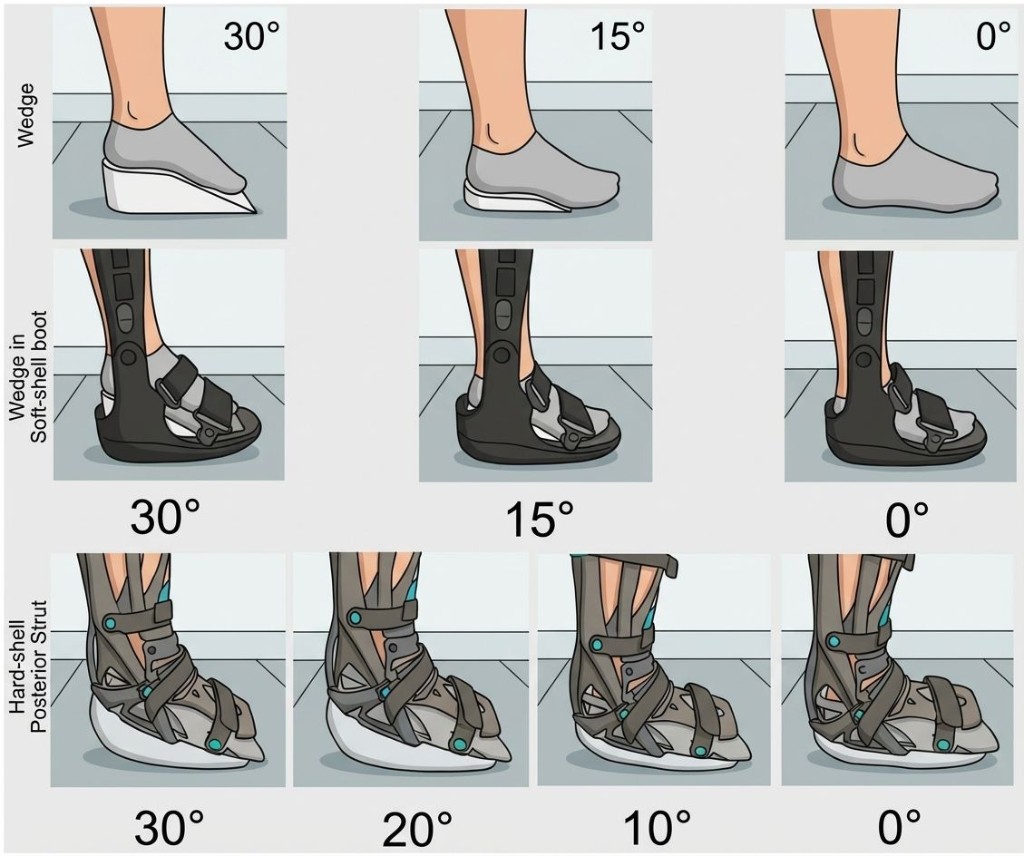
Achilles Boots: Wedge Geometry and Tendon Load
Achilles boot wedges affect tendon loading: wedge versus strut design and walking speed shift loads even when angles look similar. Practical patient summary.
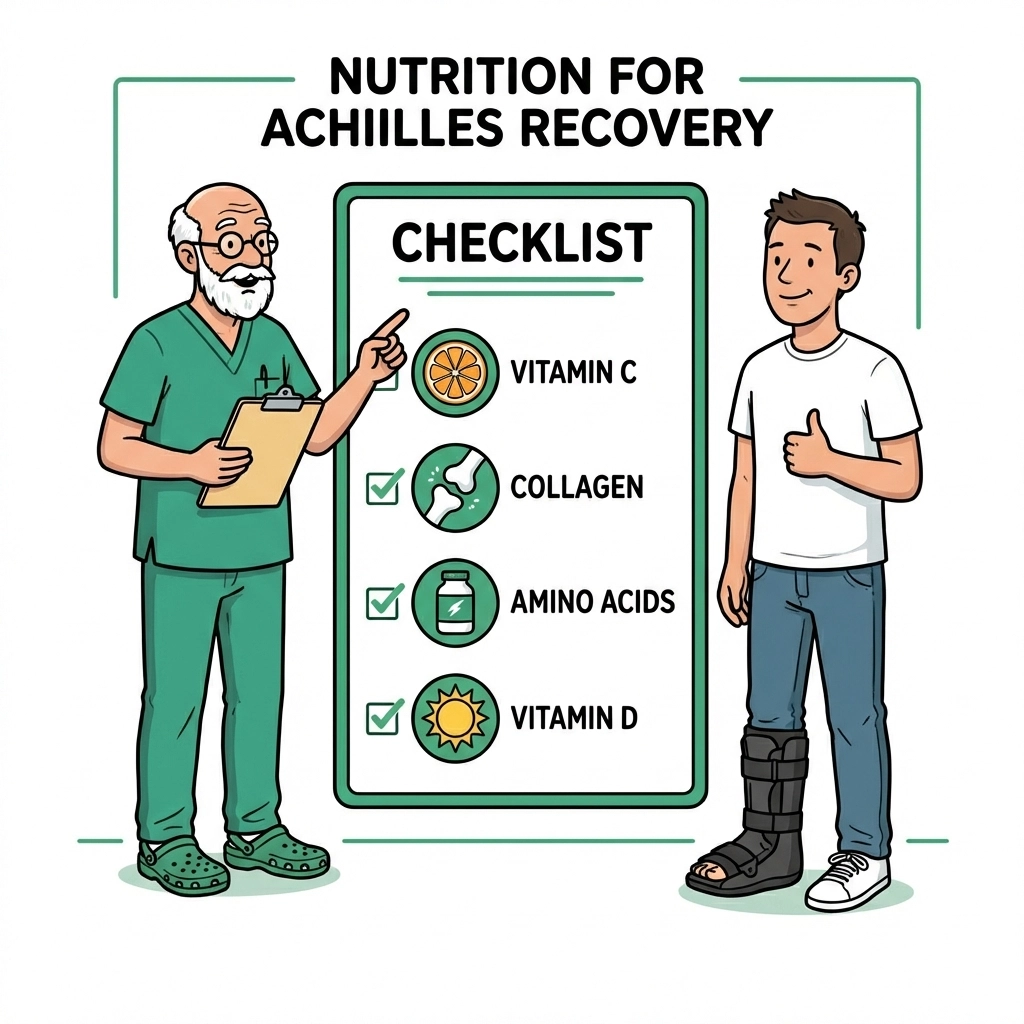
Nutrition for Achilles Recovery: What Evidence Supports
Diet after an Achilles rupture: collagen, vitamins, protein, and trendy supplements unpacked for patients—with honest gaps in Achilles-specific research and practical food-first advice.
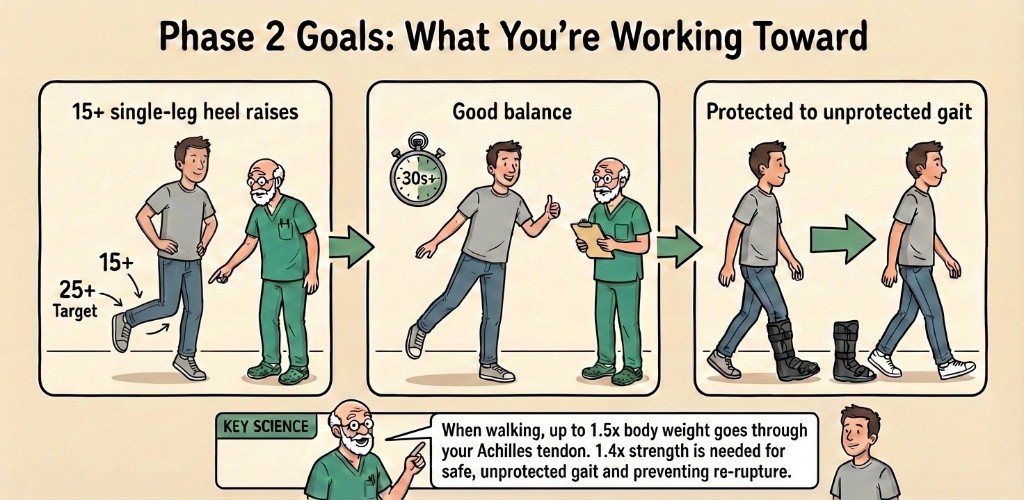
Achilles Phase 2: Ready to Walk Without the Boot?
Walking without your boot after Achilles rupture hinges on tendon load, calf strength, heel raises, balance—not week numbers alone. Phase 2 targets explained.
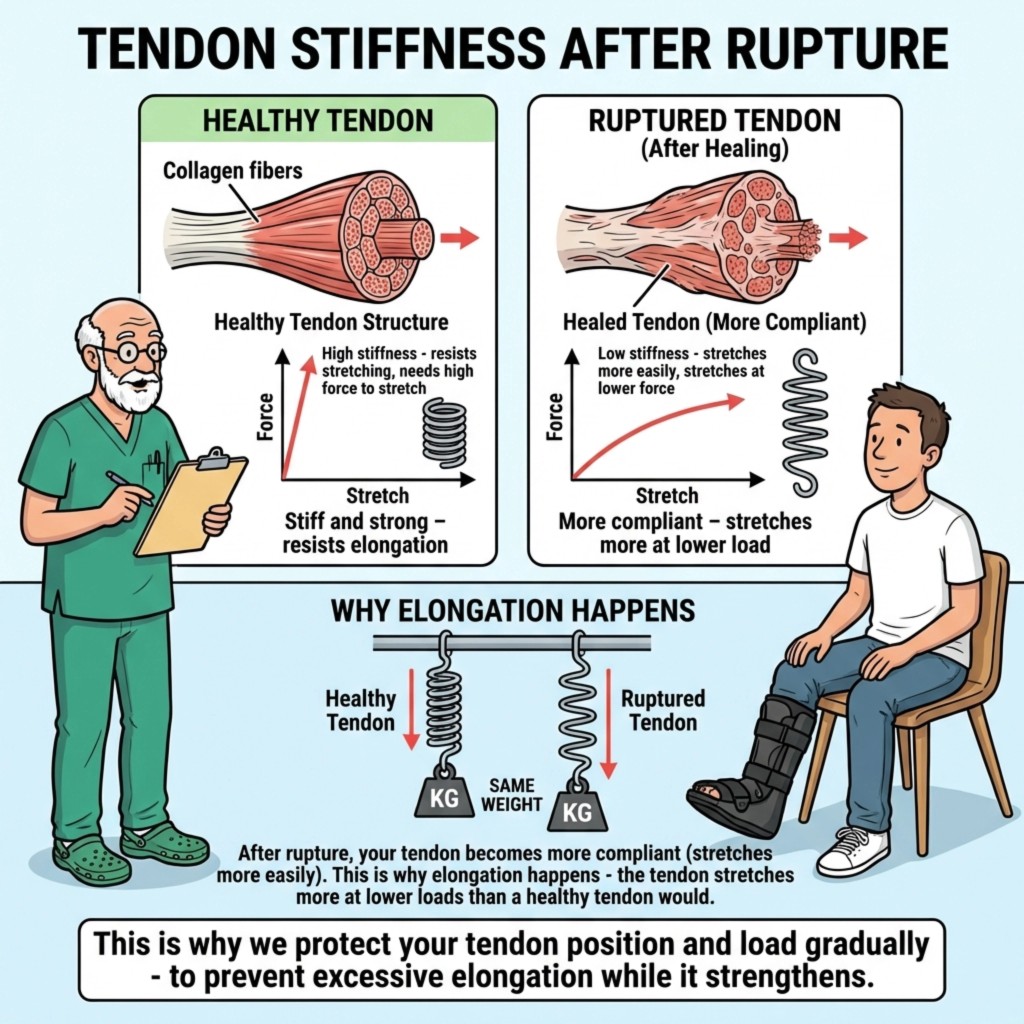
Achilles Tendon Elongation: Why Healing Tissue Stretches
After an Achilles rupture, healing tendon is more compliant—it stretches more under the same load. Learn why that drives elongation risk and how boot protocols protect length.
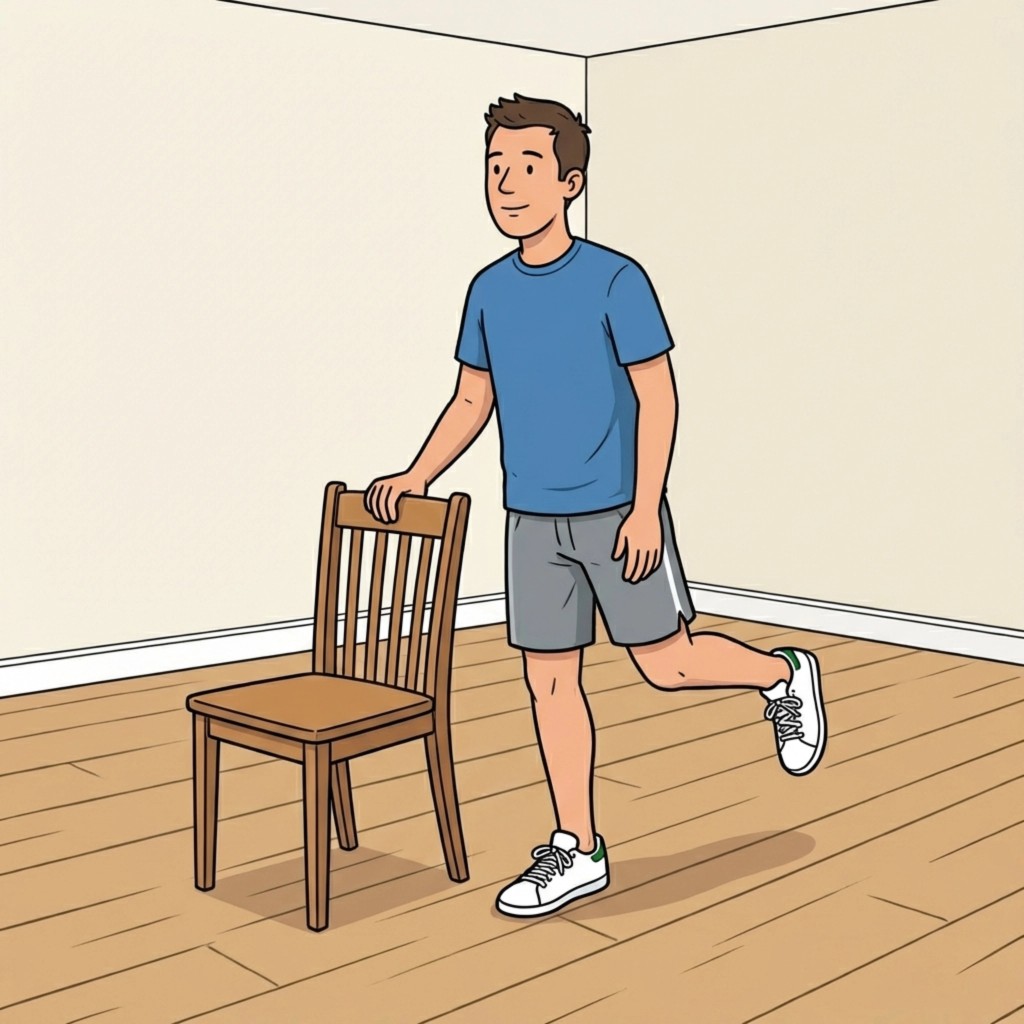
Achilles Rehab: Balance and Neuromuscular Control
Achilles rehab balance work: after a boot, proprioception, neuromuscular control, and confidence need rebuilding with graded single-leg training. Patient guide.
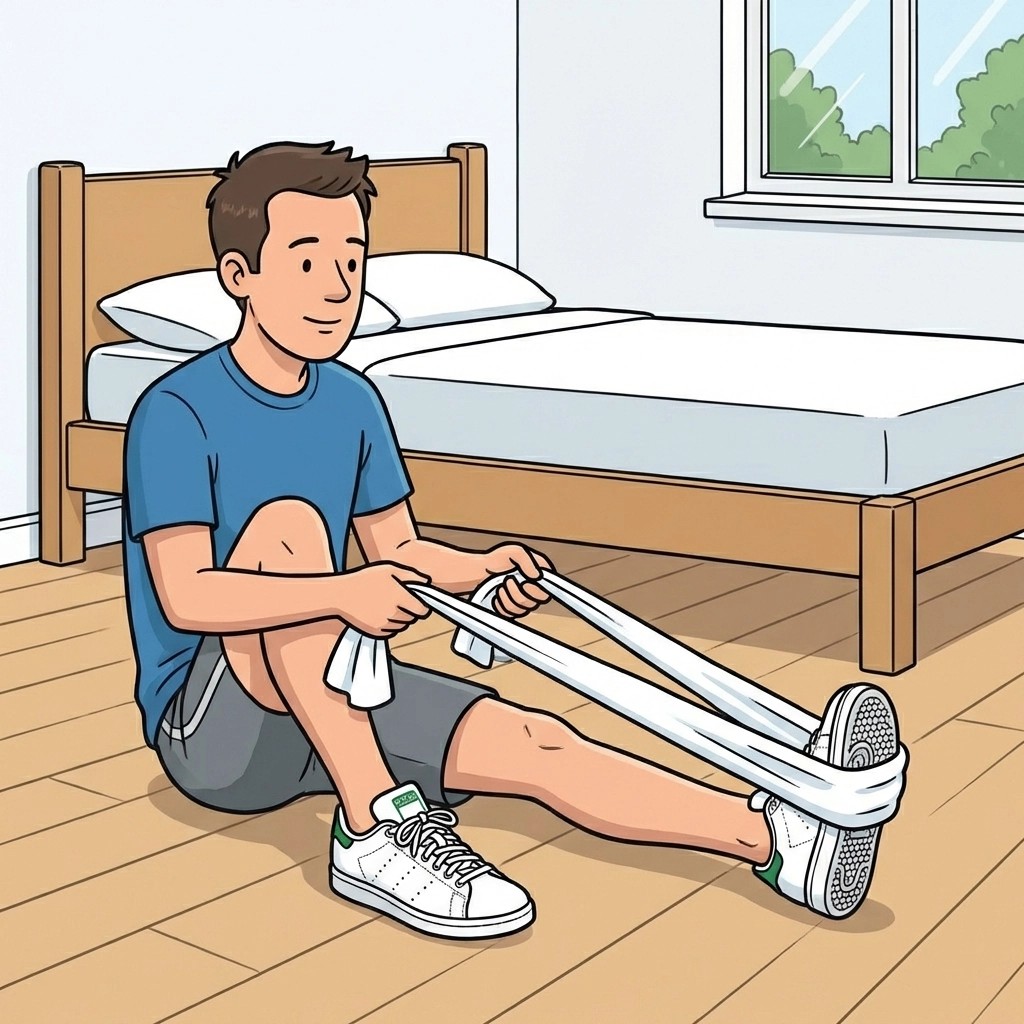
Achilles Rehab: Mobility vs Load in Stage 2
Achilles rupture rehab balances mobility vs load with gentle range and resistance band plantarflexion, avoiding aggressive stretching for tendon integrity.
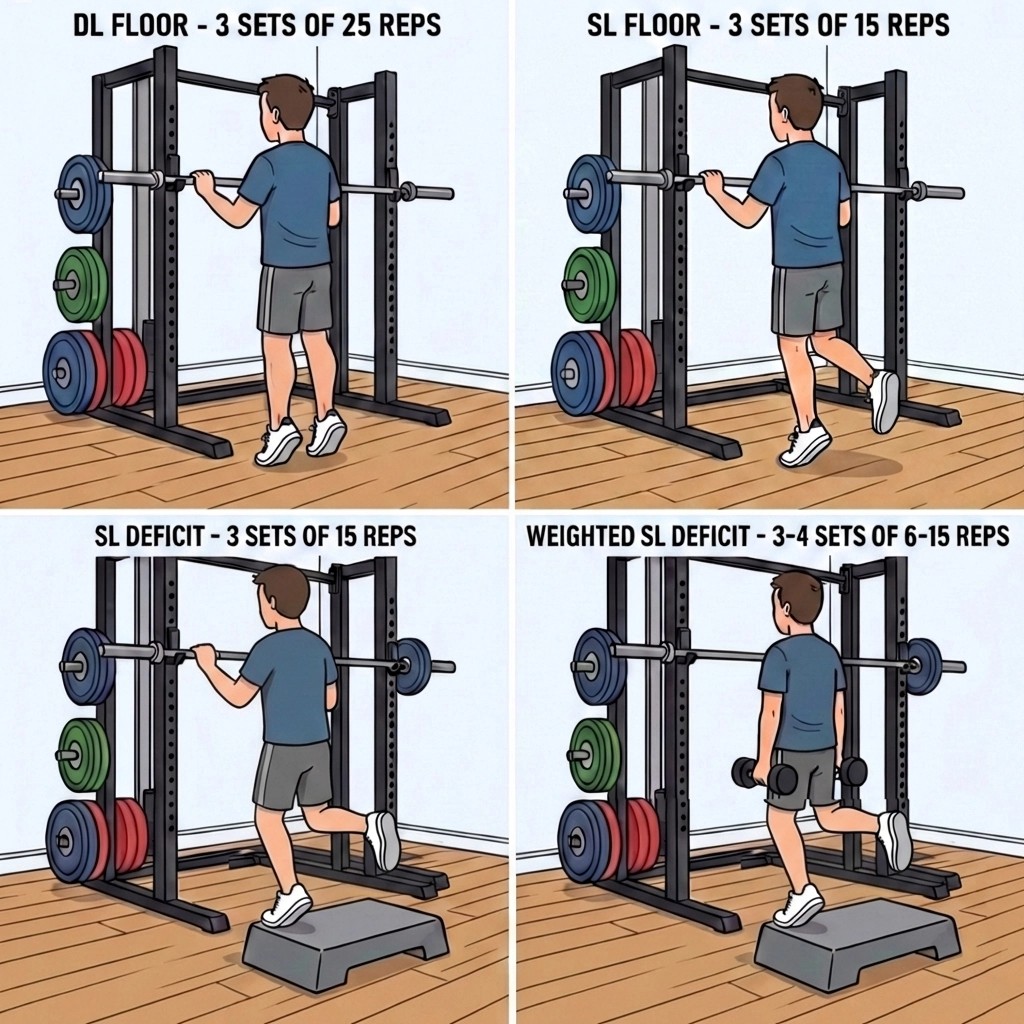
Achilles Rehab: Single-Leg Heel Raise Progression
Single-leg heel raises after Achilles rupture mark readiness for higher load. Learn safe progression from double-leg work to flat-ground single-leg, then load.
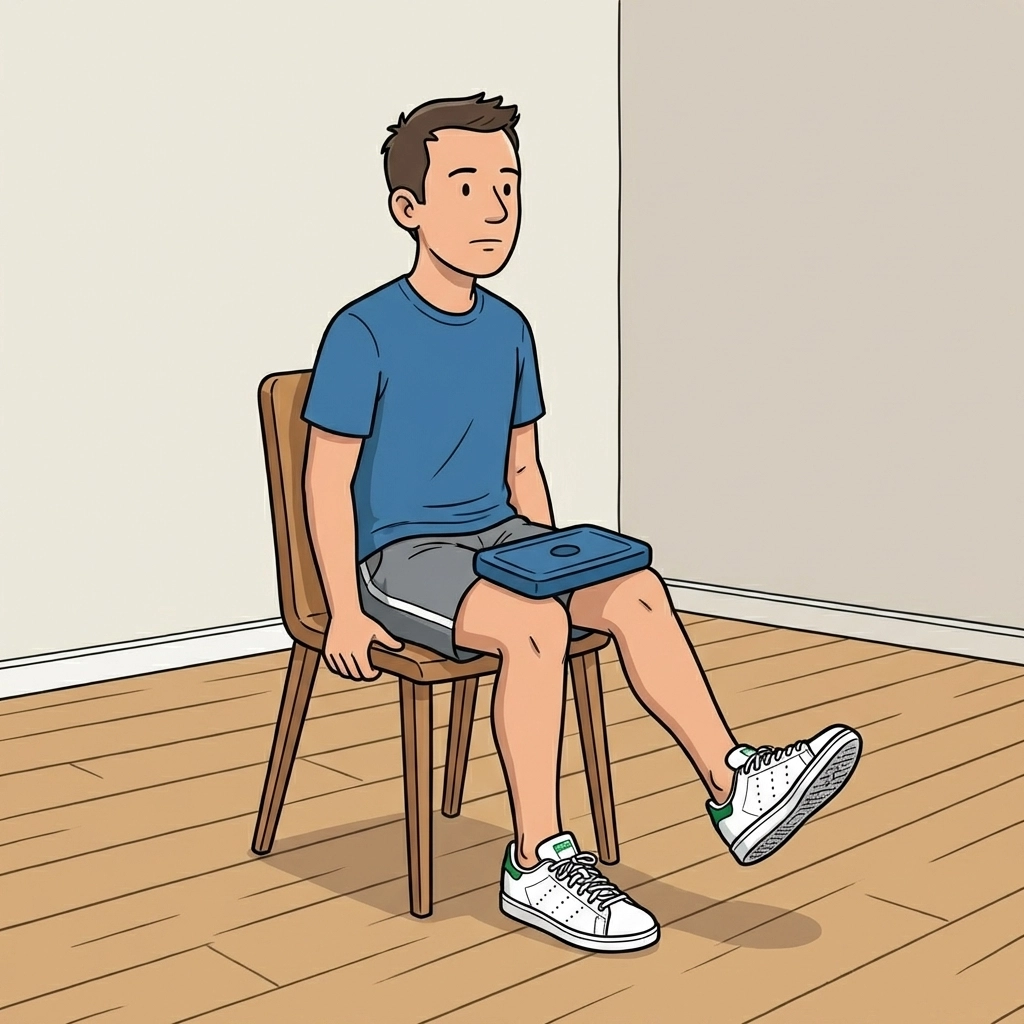
Achilles Stage 2 Strength After Boot Removal
Achilles Stage 2 rehab after boot removal focuses on seated calf loading, progressive heel raises, balance, and controlled mobility to rebuild strength safely.
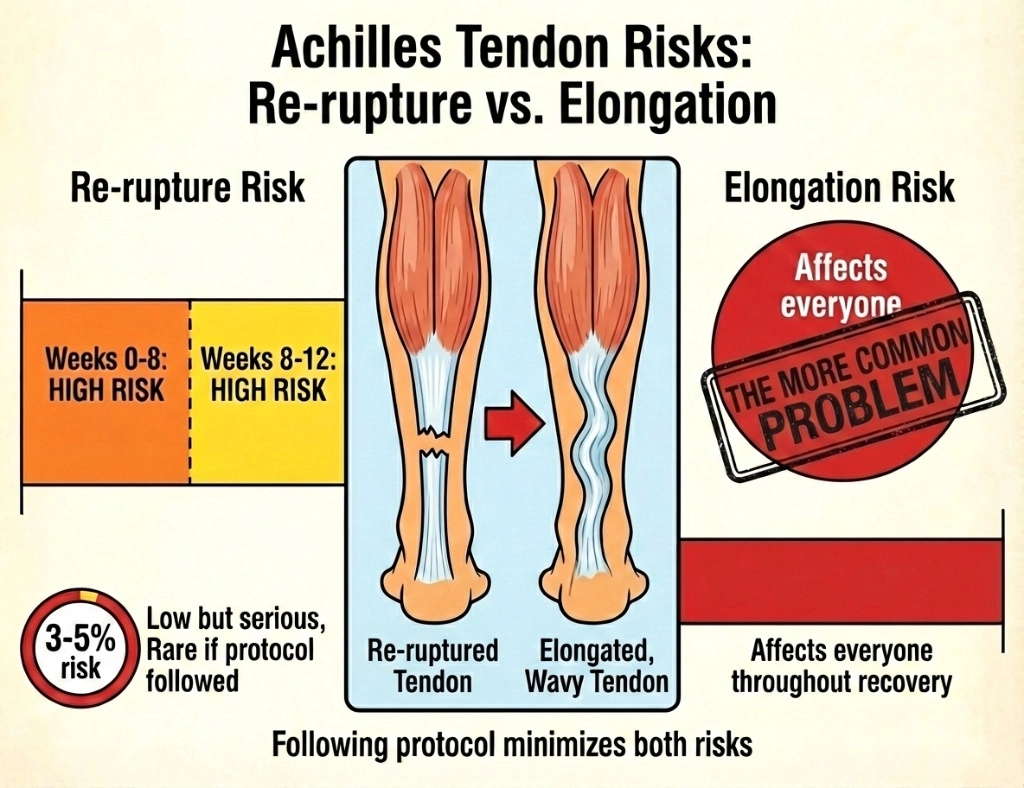
Achilles Re-Rupture vs Tendon Elongation Explained
Achilles re-rupture is rare (about 3–5%) with modern care, but tendon lengthening is common on scans. Learn how elongation affects push-off, boot rules that help, and urgent warning signs.
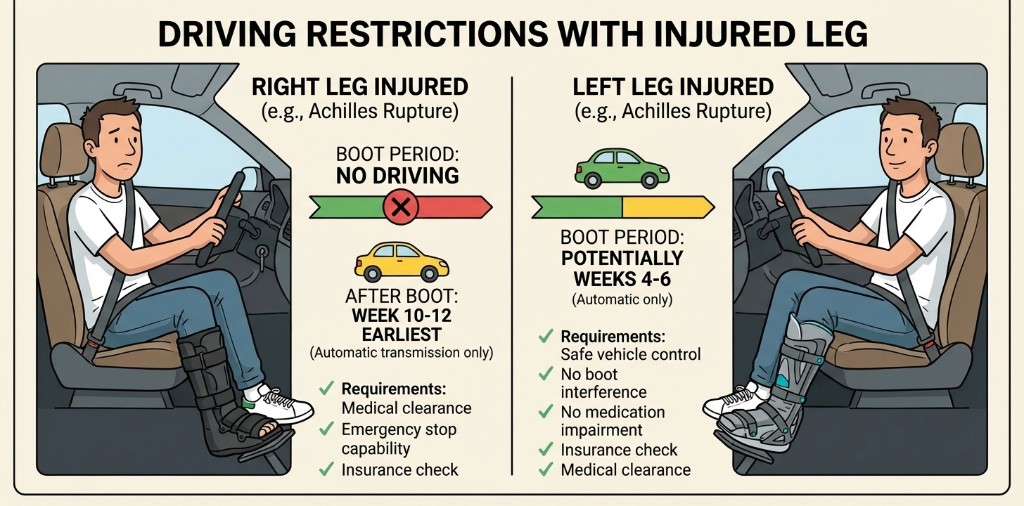
When Can I Drive After Achilles Rupture?
After Achilles rupture, driving safely depends on brake foot, gearbox, meds, insurer rules, and decisive emergency braking - not calendar weeks alone.
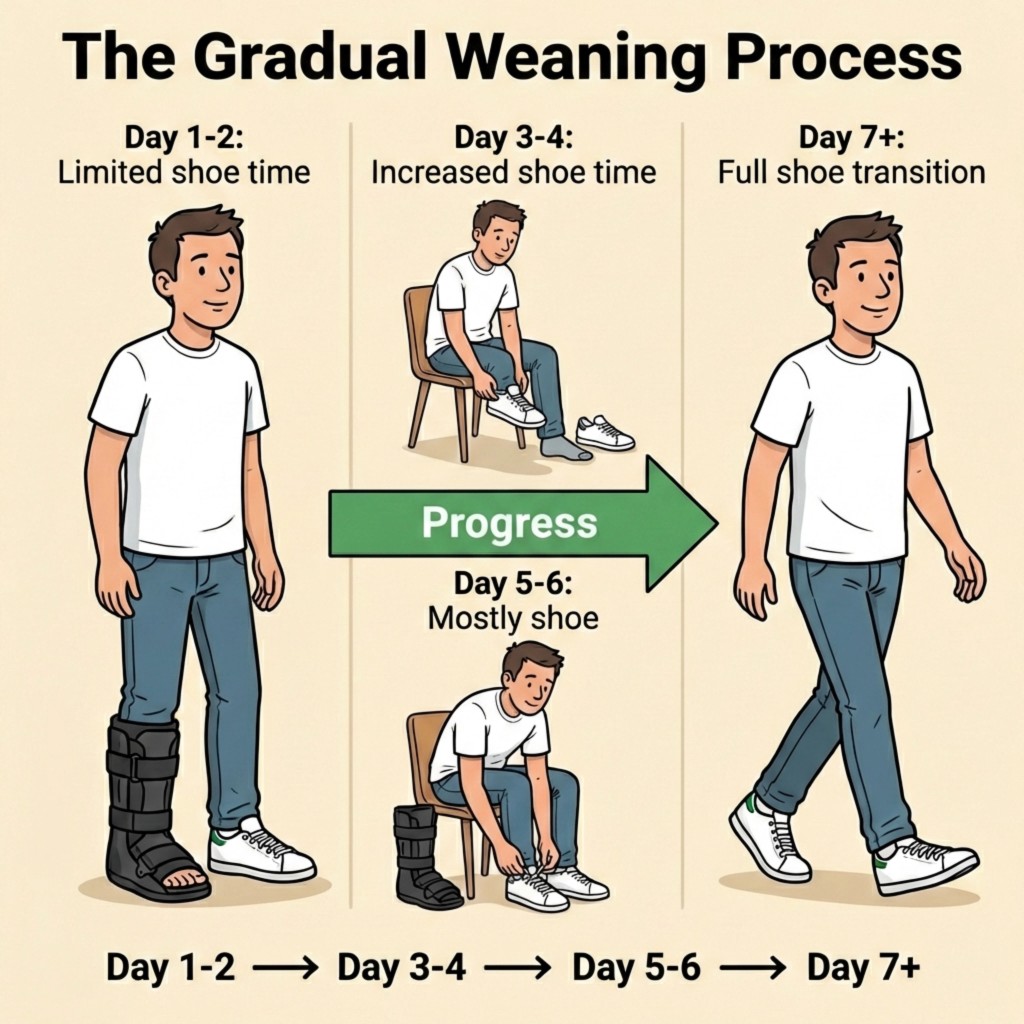
Post-Boot Achilles Transition: How to Wean Safely
Post-boot Achilles recovery is a hidden risk phase. A gradual week 10-12 shoe transition with heel lifts and symptom checks helps reduce elongation risk.
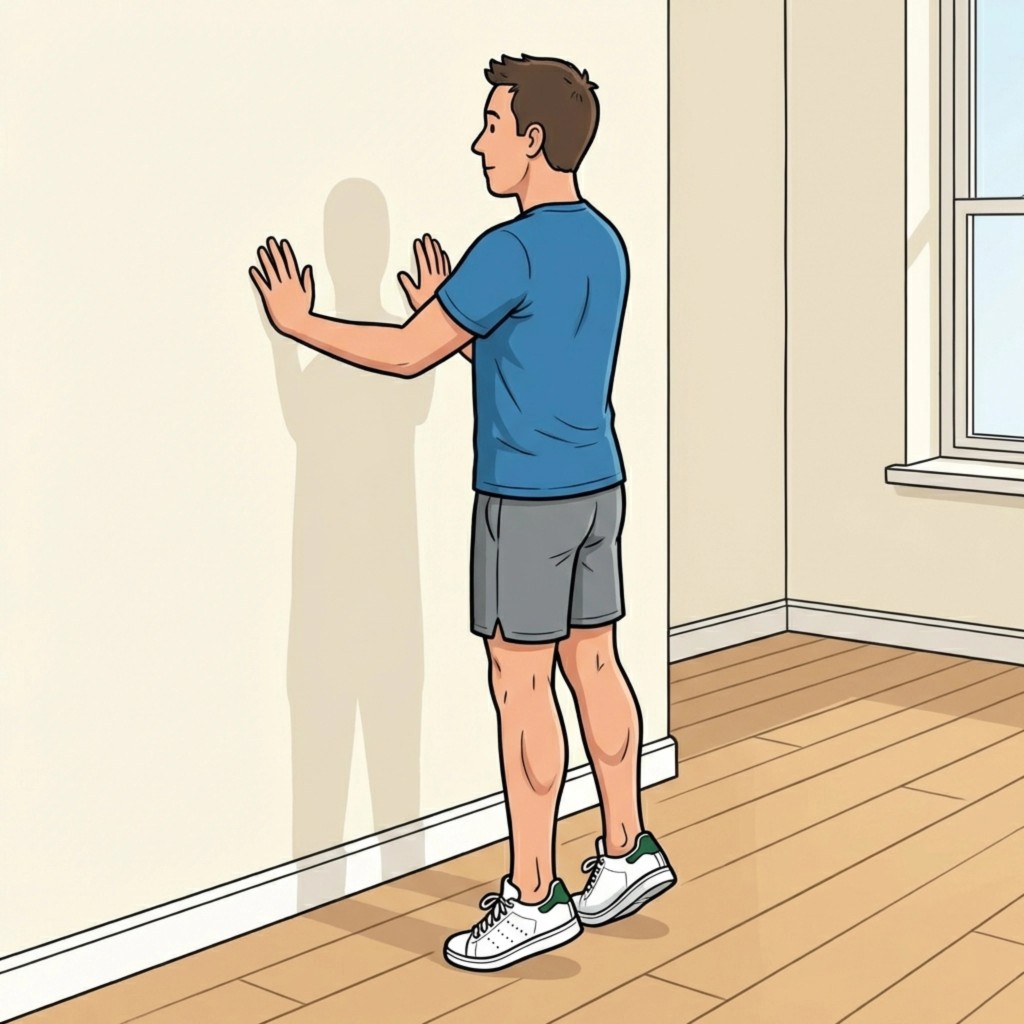
Standing Calf Raises After Achilles Rupture: Progression
Standing calf raises after Achilles rupture move you from seated to weight-bearing strength. Criteria-based progression reduces overload and elongation.
Achilles Boot Comparison Tool: Walking Boot Finder
Compare Achilles walking boots by weight, price, and fit. Recovery outcomes track your protocol more than brand—confirm any switch with your clinician.
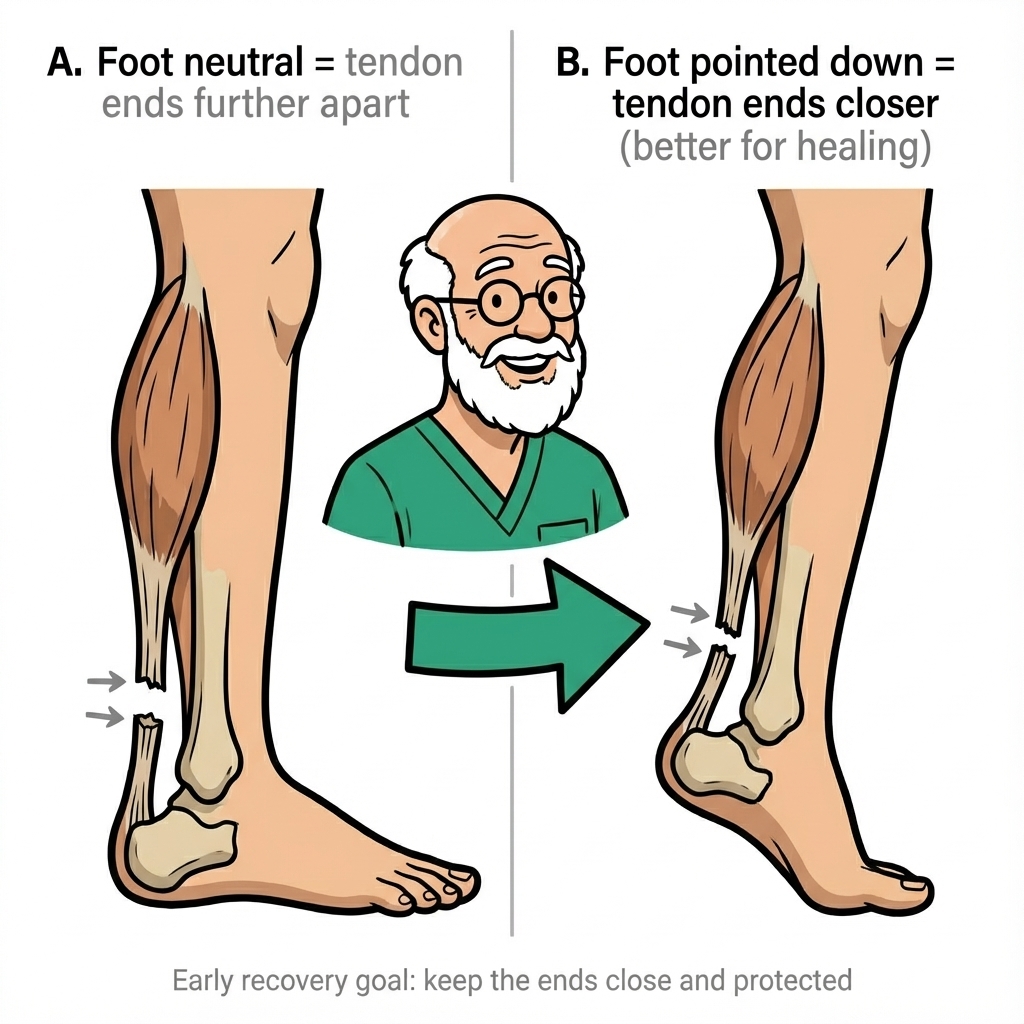
Heel Height for Achilles Recovery: Lifts, Boot Wedges, and Shoes
Why heel height matters after an Achilles rupture: boot wedges, in-shoe heel lifts, drops for runners, and how poor positioning risks tendon elongation.
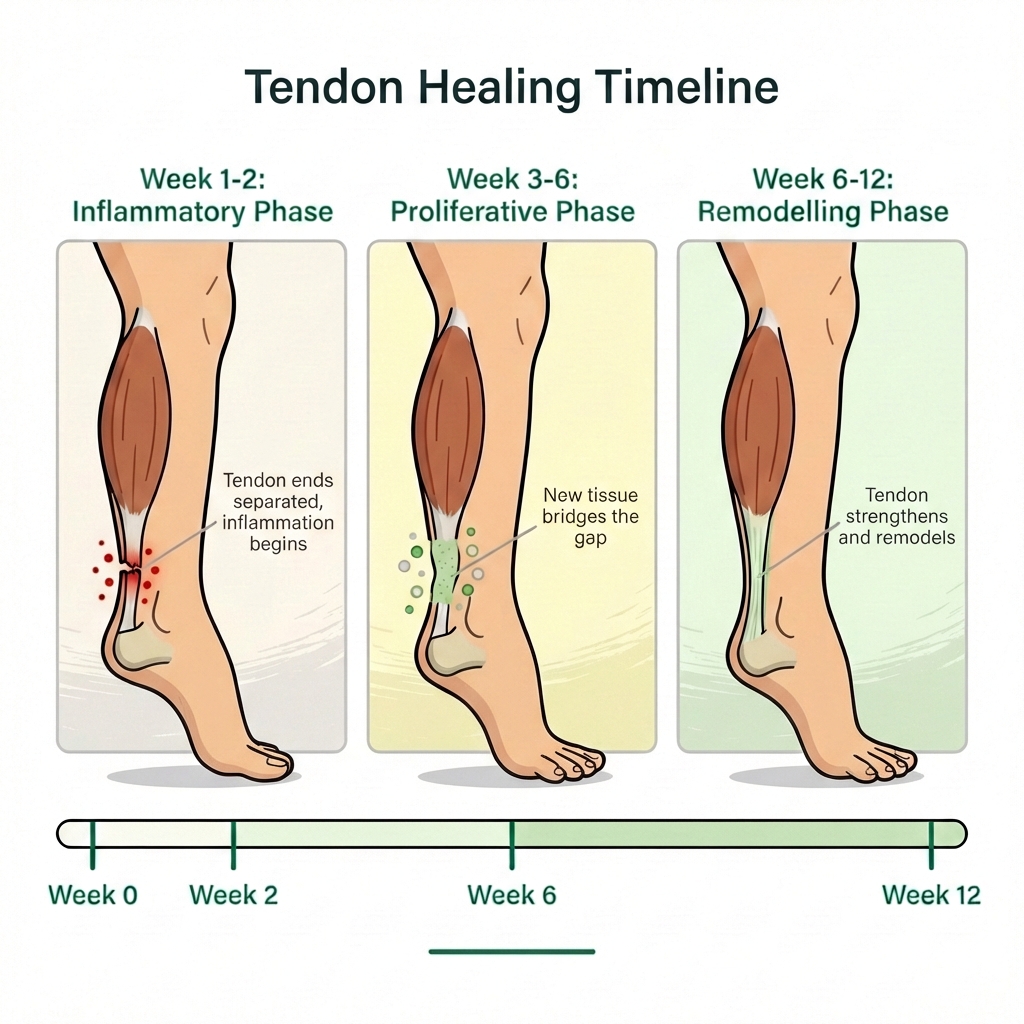
Long-Term Strength After Achilles Rupture
Calf weakness years after Achilles rupture: why tendon length and muscle size change, what trials say about surgery vs non-surgical care, and rehab priorities.
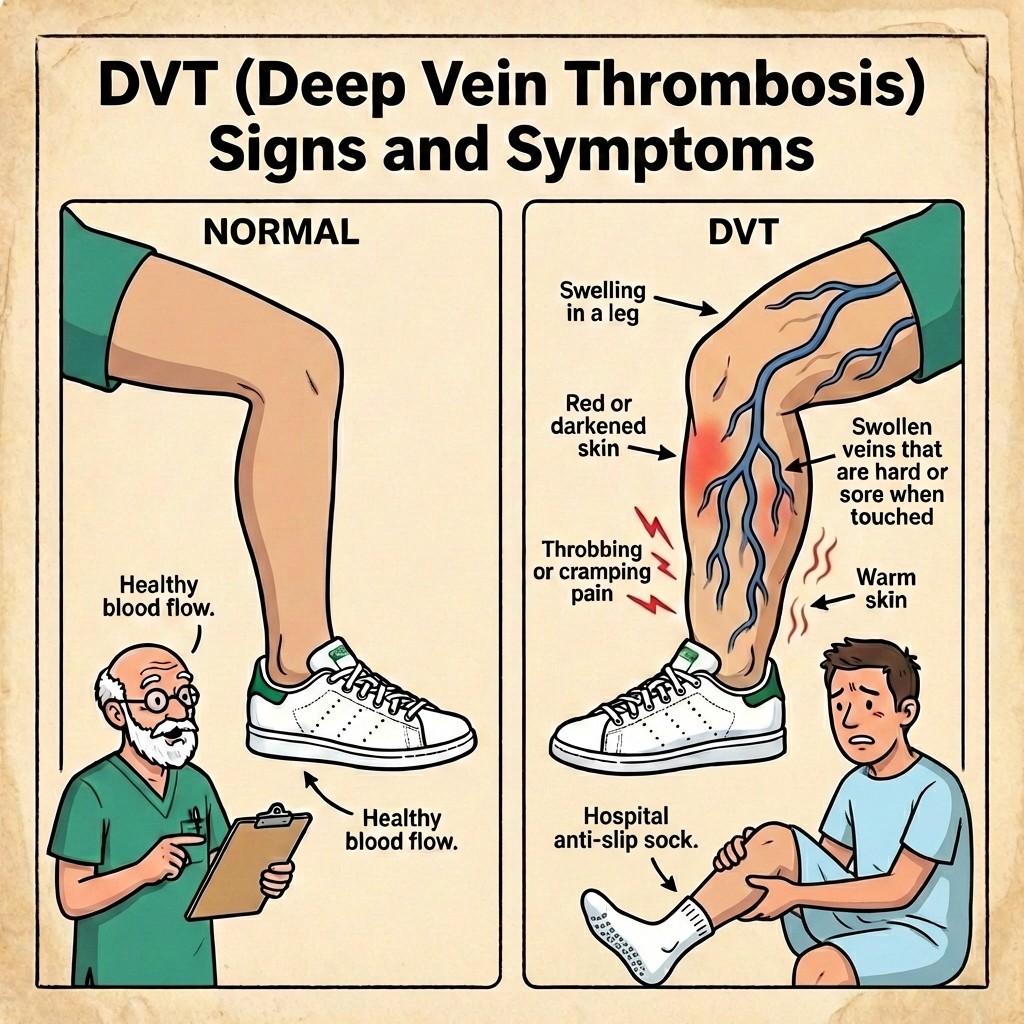
Achilles Rupture Clot Risk: Beyond the Boot
Immobilisation after Achilles rupture raises clot risk. Learn DVT and PE red flags, injection vs tablet options, and what to ask your team in week one.
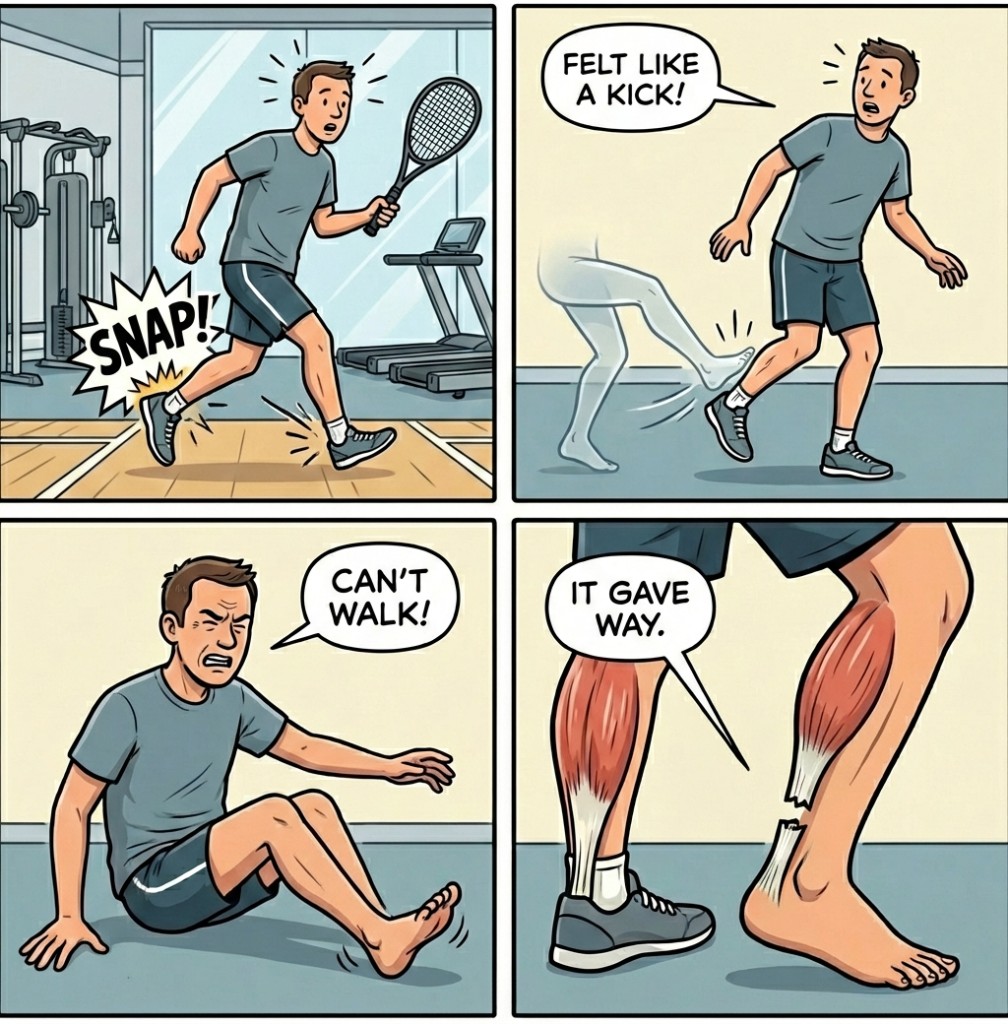
First 24 Hours Achilles Rupture Care
In the first 24 hours after an Achilles rupture, protection comes first. Learn immobilisation, safe weight-bearing, red flags, and what to do next.
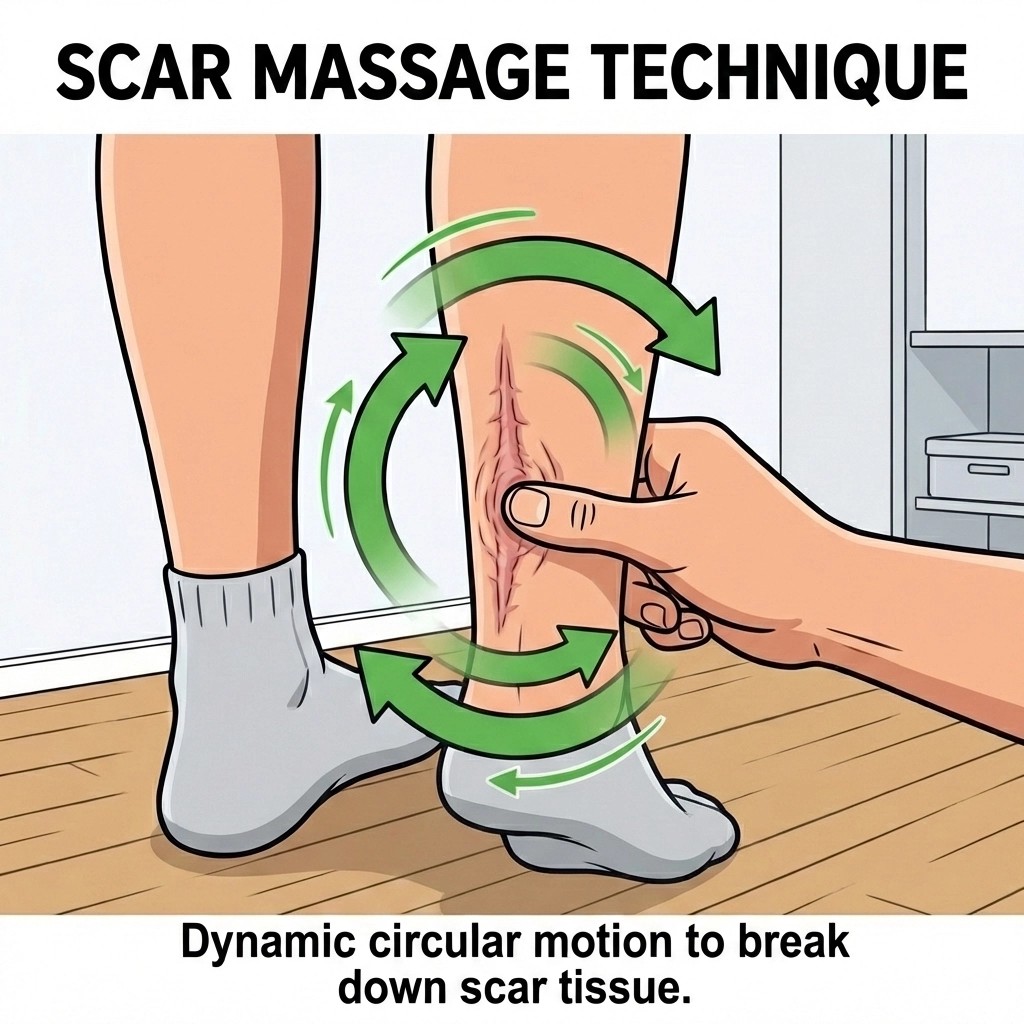
When to Start Scar Massage After Achilles Surgery
Most patients can start gentle scar massage after Achilles surgery once the wound is fully closed. Learn timing, technique, and red flags to stop.
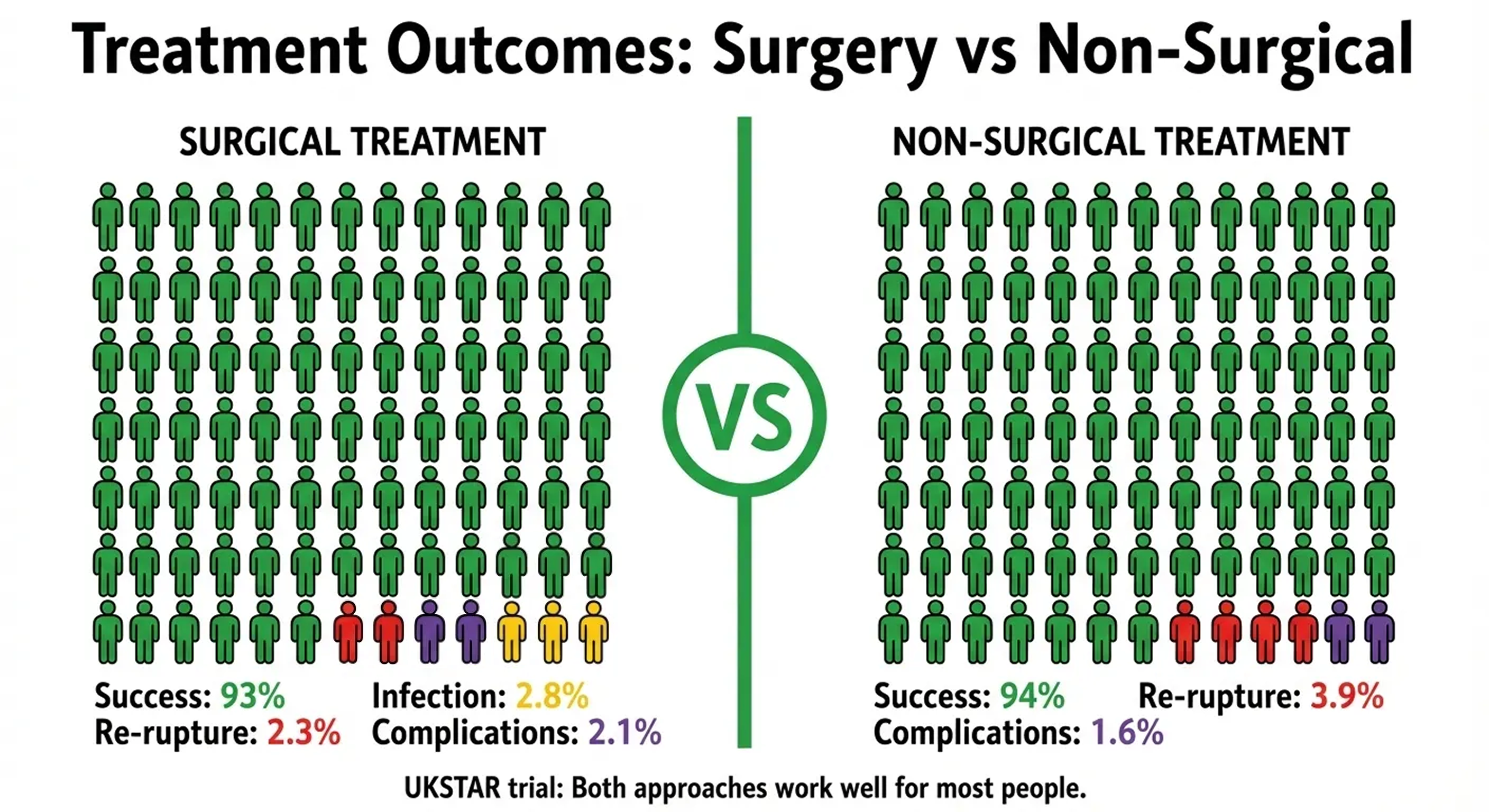
Achilles Surgery vs Non-Surgical: What Evidence Shows
Achilles rupture surgery vs non-surgical care: re-rupture, infection, and what UKSTAR really compared. Plain-language summary for patients facing the decision.
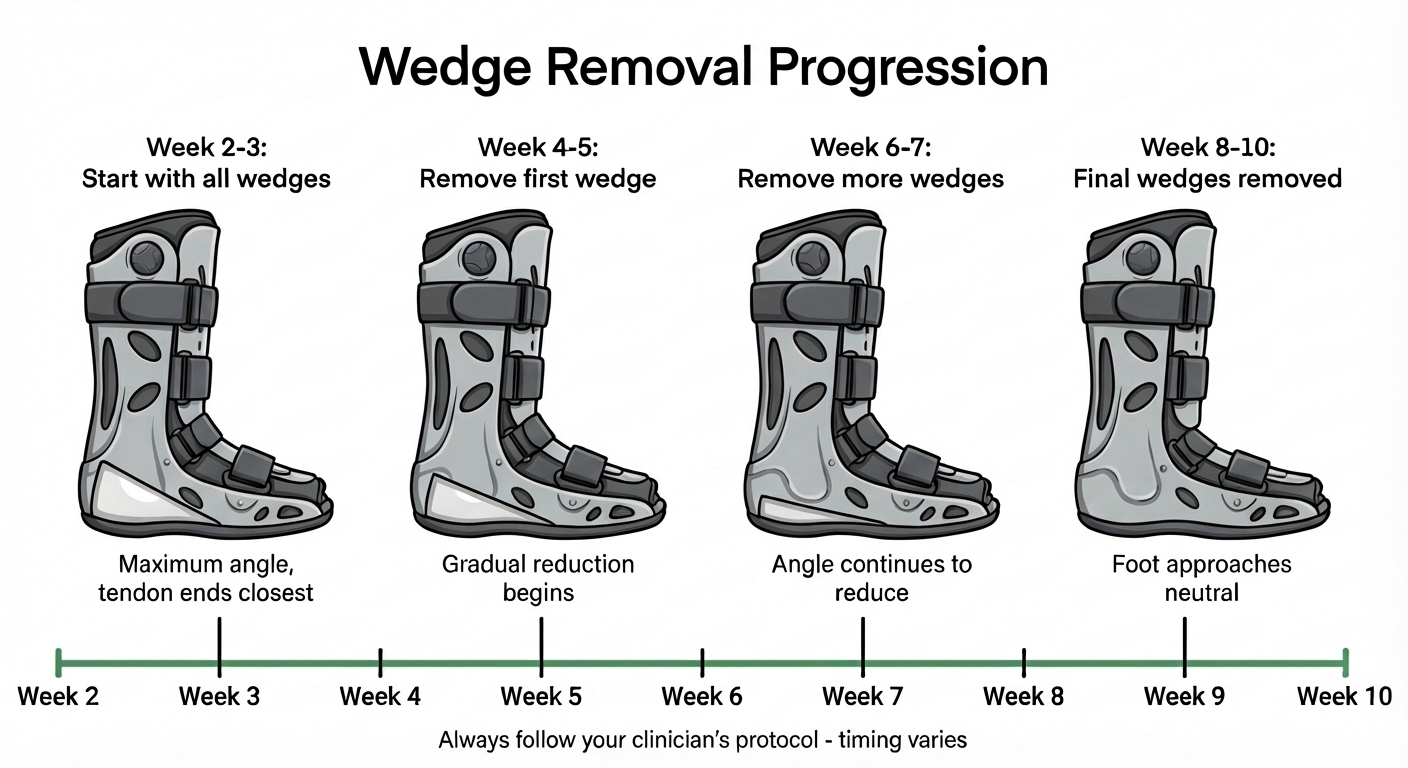
Achilles Boot Wedge Removal: Why Progression Is Gradual
Achilles boot wedge removal steps your foot from toes-down to neutral. Learn why gradual progression matters, typical timelines, and risks of rushing your protocol.
Foot Position After Achilles Rupture: Why Toes Down
After an Achilles rupture, holding your foot toes down (plantarflexion) brings torn tendon ends closer; a neutral foot can gap the tear. Boots, sleep, and early protection explained.
Achilles Tendon Healing: Why Early Protection Matters
After an Achilles rupture, tendon healing moves through three phases. Learn why weeks 3–6 are fragile, how length is protected, and how to stay safe in a boot.
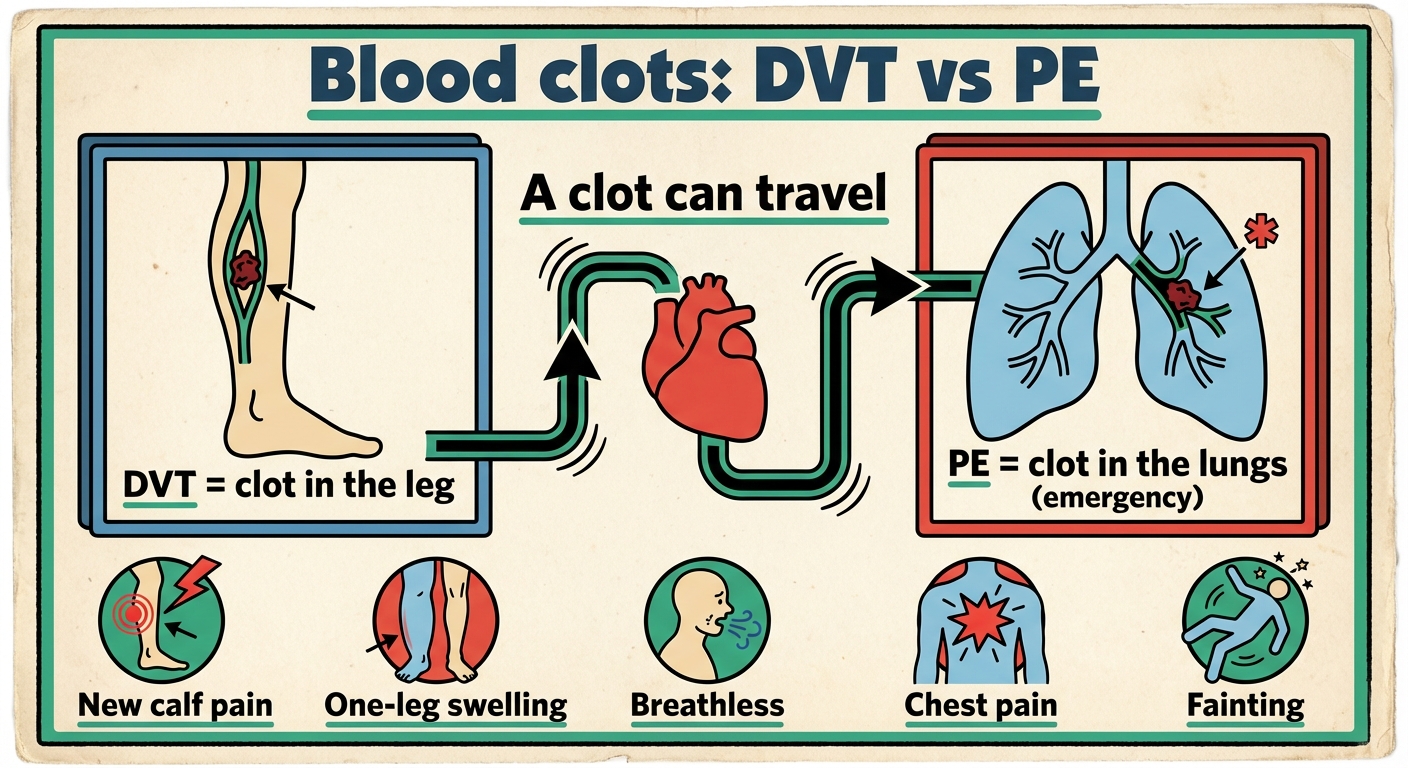
Blood Clot Risk After Achilles Rupture: DVT and PE
Achilles rupture patients face a high blood clot risk. Learn the warning signs of DVT and PE, who needs blood thinners, and how to protect yourself during recovery.
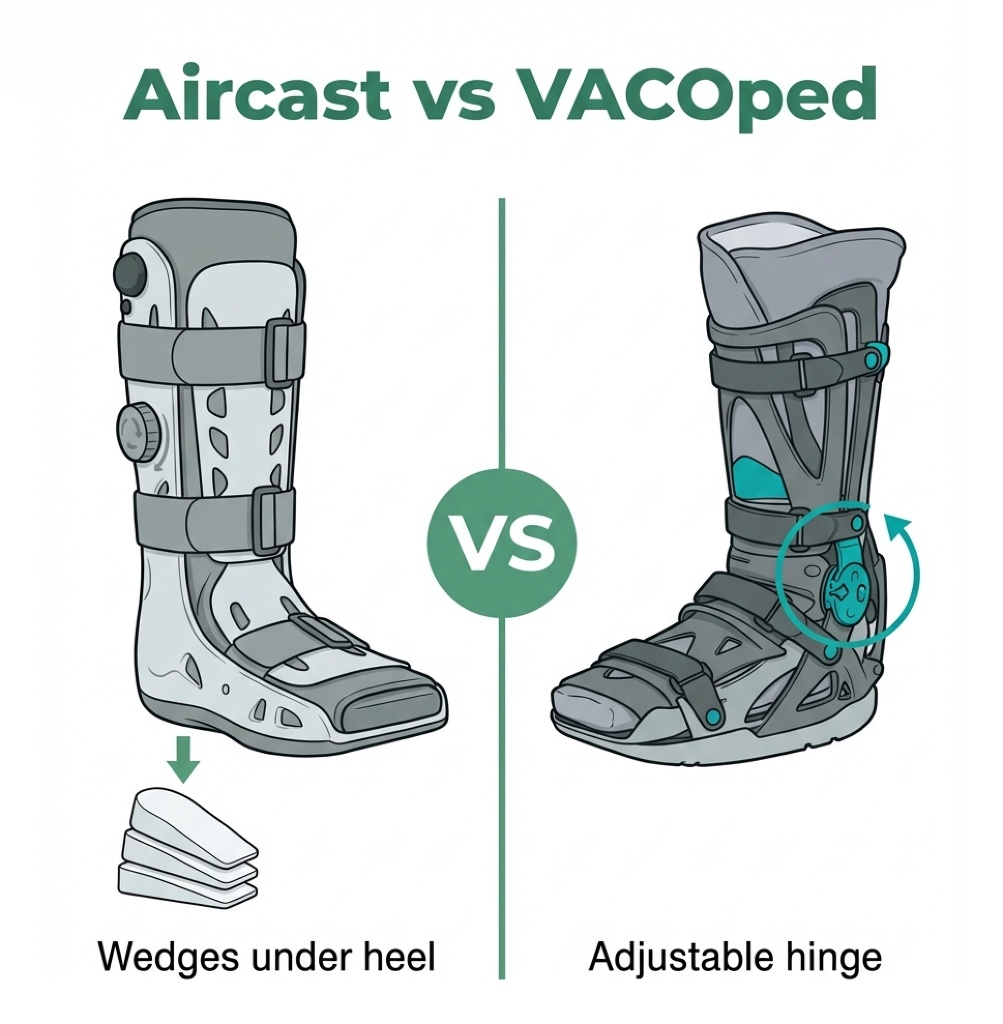
Aircast vs VACOped: Which Boot for Achilles Rupture?
Aircast vs VACOped for Achilles tendon rupture: how wedge boots and hinged boots work, costs, and research. Following your protocol matters more than brand.