Nutrition after an Achilles tendon rupture sounds like low-hanging hope: powders, influencer stacks, hashtags about collagen and miracles. Quiet truth: almost every trial people quote studied young healthy tendons exercising hard, general wound healing, or unrelated tendon operations—not your exact injury timeline. Within that gap your job is simple:
-
Eat enough wholesome food daily (energy deficit makes everything harder).
-
Hit normal protein portions unless a dietitian diagnoses a shortfall—you do not need mythical triple-bodyweight grams on evidence today.
-
Keep micronutrient holes closed (vitamin C, vitamin D, zinc) mainly through meals; supplement only when medically sensible.
-
Let controlled loading, sleep, and rehab pacing dominate results—biology still obeys tension and time (early tendon healing recap).
Contents
- Key takeaways
- What high-quality tendon studies actually examined
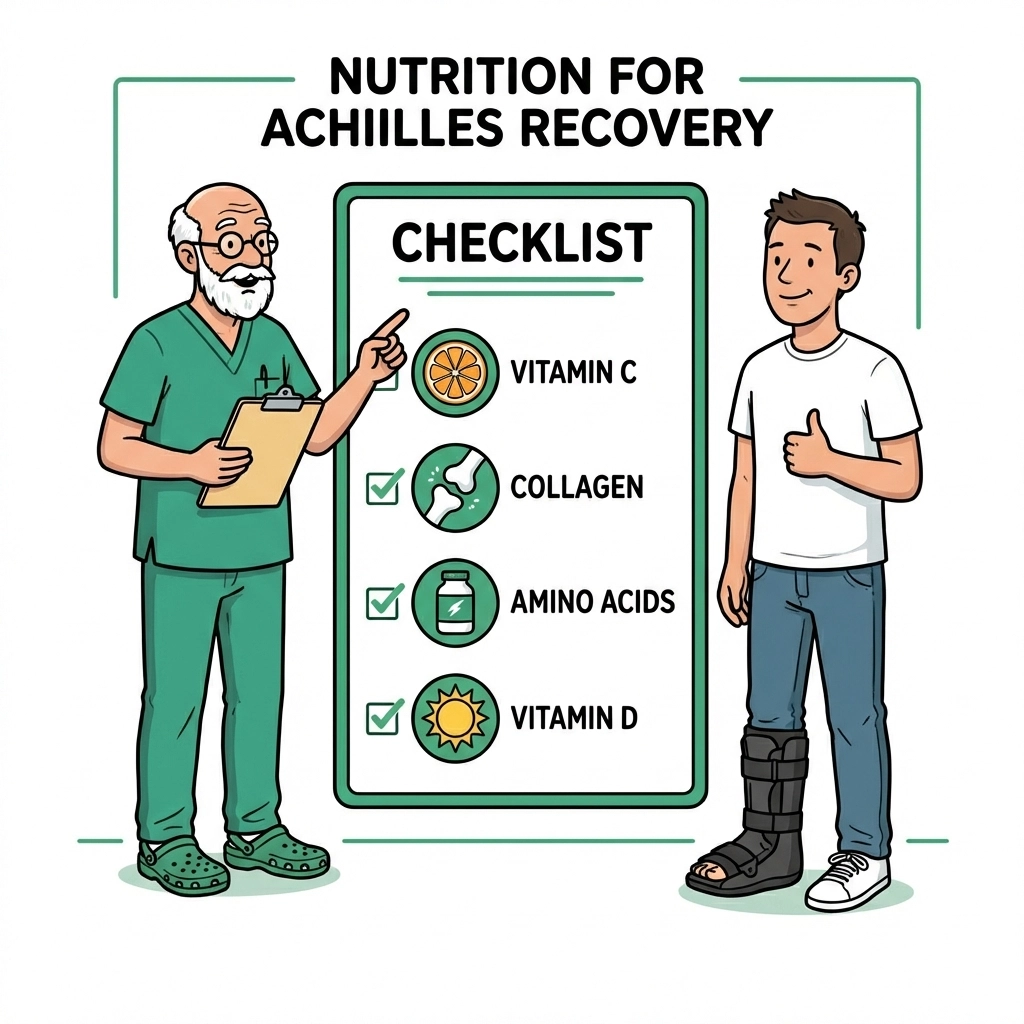
- Food-first playbook (matching the infographic)
- Supplements: promise versus proof
- Nutrition myths that waste money or worry
- What this means for your recovery
- Frequently asked questions
- References
Key takeaways
- Very few studies enrol acute Achilles rupture patients purely to test shakes or vitamins — most advice extrapolates.
- Balanced diets supplying adequate protein remain the foundation; extreme macro hacks lack rupture-directed proof.
- Vitamin C, glycine / proline–rich collageous foods, vitamin D, zinc, magnesium, omega-3s each play roles in physiology yet replacement only helps if you lacked them.
- Collagen peptides + vitamin C timed before loaded exercise may shift training tendon morphology—interesting, not interchangeable with post-surgery week two miracles.
- Mechanical fidelity (boot, sleep protection, staged wedges) dominates elongation risk and return-to-run metrics ahead of powders.
What high-quality tendon studies actually examined
The splashy systematic review everyone forwards (Buchalski et al., 2026) screened hundreds of abstracts, narrowed to full-text reviews, then eight RCTs. Those trials paired collagen peptides with planned supervised strengthening blocks—usually weeks of regimented lifts on mostly healthy adapting tendons. Findings rhyme with an earlier umbrella review of collagen peptide trials (Khatri and colleagues, 2021).
| Theme | Typical study design | Big-picture takeaway for patients |
|---|---|---|
| Tendon size / stiffness surrogates | Collagen peptides + intensive strength work | Emerging signal that tendon structure metrics can budge—but sport performance leaps unreliable |
| Muscle strength | Same RCTs usually show training drives strength gains; collagen add-ons inconsistently additive | |
| Vitamin C synergy | Small loading-lab crossover studies (Shaw) | Combining vitamin C–timed collagen peptides ahead of tendon-loading activity can lift acute collagen pro-peptide chemistry markers—biology hint, not fracture-clinic prescribing |
Translation: supplementation news you read is overwhelmingly adaptation-plus-loading science, whereas early rupture rehab is mostly protection + gradually reintroducing safe tension. Borrow ideas cautiously!
Food-first playbook (matching the infographic)
Rather than rattling capsules first, assemble plates:
| Checklist pillar | Roles (plain English) | Food examples |
|---|---|---|
| Vitamin C | Cofactor helping enzymes cross-link fresh collagen fibres | Citrus, berries, kiwi, peppers, broccoli |
| Collagen / gelatin precursors | Provides glycine, proline, hydroxyproline used when the body manufactures matrix | Meat on the bone, slow-cooked stews with connective tissue, gelatine-rich soups (many collagen peptide powders mimic this nutrient profile) |
| Amino acids (protein breadth) | Leucine-rich meals support muscle upkeep while you offload the leg | Fish, yoghurt, pulses, tofu, poultry, modest red meat portions if tolerated |
| Vitamin D | Supports muscle contraction & bone–tendon health contextually | Oily fish, eggs, fortified dairy; sunlight budgets individually variable |
Hydration, fibre, colourful plants (polyphenols), and habitual warm meals aid compliance when crutch life is tiring.
Supplements: promise versus proof
Collagen peptide powders
- Trials giving ≥15 g/day gelatin/collagen with vitamin C ≥50 mg ~30–60 min pre-session underpin mechanistic chatter.
- Buchalski narrative: higher-dose/longer RCTs leaned toward tendon CSA gains pairing collagen with vigorous strength blocks; heterogeneous methods limit rubber-stamping dosing.
- If you dislike eating actual protein-rich food while immobile, peptides can bridge convenience—financially weigh monthly cost versus diet tweaks.
Vitamin D
- 2025 scoping synthesis centred on operative tendon cohorts (rotator cuff heavy) noted association patterning tying deficiency to poorer healing surrogates—few Achilles-exclusive rows, limited GRADE certainty.
- Sensible playbook: deficiency diagnosed → replenish per physician; latitude / winter risk → discuss dosing; resist unsupervised IU escalations interacting with meds.
Omega-3 (fish/algal oils)
- Good anti-inflammatory pedigree generally; tendon-specific Achilles RCT line remains thin—do not pause anticoagulants unless surgical team directs.
Zinc – magnesium
- Zinc aids matrix enzymes; deficits rare with varied diets unless malabsorption. Magnesium cramps sometimes improve intake—again confirm with clinician if kidney disease.
Holwerda & van Loon’s sport-focused review summarises physiology: collagen protein intake elevates circulating glycine / proline kinetics aiding repair windows—but mechanical stimuli remain the master switch.
Nutrition myths that waste money or worry
- Mega-protein without training change magically healing tendons (no Achilles RCT support detected in major reviews).
- Expensive alkalising waters / detox teas: zero credible tendon RCT equity.
- Avoiding carbs during energy demanding protected walking weeks can blunt session quality and mood — balance matters.
If advice collides with your surgical team (anticoagulants, diabetes, CKD) — their rules win.
Psychological reassurance: obsessive supplement hunting often masks anxiety about tearing again; pair honest nutrition with reading Achilles rupture clot awareness and long-term calf strength expectations for grounded milestones.
What this means for your recovery
Week-by-week playbook:
Weeks 0–6 protective phase
-
Reliable protein at two meals/day minimum unless dietitian dictates more (vegetarians: pulses + grains pairing).
-
Fruit/veg daily (vitamin C).
-
Discuss vitamin D only if flagged or geographically high risk—GP can check once if uncertain.
Weeks ~6 onward rehab intensification
- If ethically curious & budget OK: collagen trial window aligning with therapist sessions—consume prior supervised loading blocks; include vitamin C pairing per established lab timing paradigm.
Whole recovery
-
Smoking cessation (strong lifestyle lever aligning with organisational positions impacting perfusion).
-
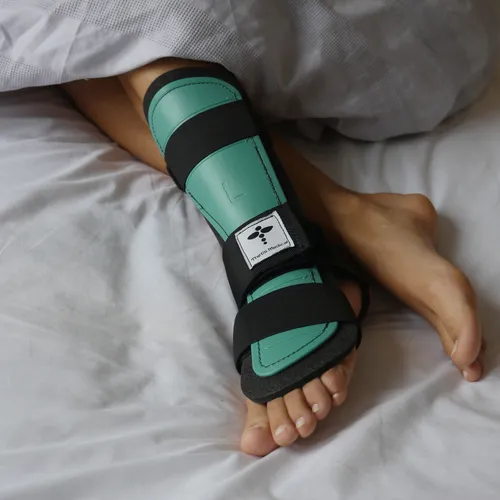
Maintain night splint compliance per team—no supplement replaces dorsiflexion guardrails while collagen is immature.
-
Follow recovery roadmap FAQ for pacing context.
Emergency nutrition flags (non-exhaustive): rapid unintentional weight loss, persistent vomiting stalling meds, escalating calf swelling painful + breathless (seek urgent care)—overlap clot vigilance—not supplement territory.
Frequently asked questions
Do I need extra protein shakes after an Achilles rupture?
Probably not uniquely versus whole food if appetite remains fair. Trials have not shown towering protein intake alone rewriting Achilles healing curves. Surgical stress or poor intake may merit dietitian escalation—individualise.
Is collagen peptide powder worthwhile?
Interesting adjunct when paired with regimented tendon-loading exercise—not substitution for immobilisation strategy. Decide with open eyes about cost-benefit, allergies, renal history.
Should I take high-dose vitamin C?
No routine megadosing. Eat produce; treat deficiency medically if present.
Will vitamin D or omega-3 supplements fix tendon healing?
They may mitigate baseline deficits / inflammatory imbalance but won’t salvage skipped rehab. Evidence mapping mostly non-Achilles; coordinate testing & dosing with clinician—especially perioperative medication interplay.
What matters more—supplements or boot and physio adherence?
Boot discipline, phased loading & strengthening protocols carry orders-of-magnitude leverage relative to powders.
References
-
Buchalski A, Jeanfavre M, Altorelli C, Leff GN. Collagen supplementation on tendon-related structural and performance outcomes: a systematic review. J Funct Morphol Kinesiol. 2026;11(1):130. DOI: 10.3390/jfmk11010130
-
Khatri M, Naughton RJ, Clifford T, Harper LD, Corr L. The effects of collagen peptide supplementation on body composition, collagen synthesis, and recovery from joint injury and exercise: a systematic review. Amino Acids. 2021;53(8):1493-1506. DOI: 10.1007/s00726-021-03072-x
-
Shaw G, Lee-Barthel A, Ross ML, Wang B, Baar K. Vitamin C–enriched gelatin supplementation before intermittent activity augments collagen synthesis. Am J Clin Nutr. 2017;105(1):136-143. DOI: 10.3945/ajcn.116.138594
-
Holwerda AM, van Loon LJC. The impact of collagen protein ingestion on musculoskeletal connective tissue remodeling: a narrative review. Nut Rev. 2022;80(6):1497-1514. DOI: 10.1093/nutrit/nuab083
-
Khan M, et al. The role of vitamin D in postoperative tendon healing: a scoping review. Orthop J Sports Med. 2025;13(10):23259671251371300. DOI: 10.1177/23259671251371300 (PMC access)
Primary source: Buchalski A, Jeanfavre M, Altorelli C, et al.. Collagen Supplementation on Tendon-Related Structural and Performance Outcomes: A Systematic Review