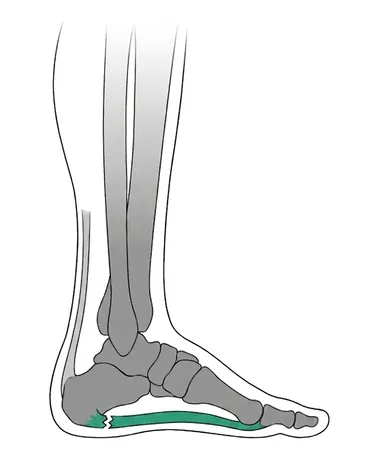
Stage 3 adds strength once daily life feels more manageable — not instead of the stretching and footwear habits from earlier stages. Stronger calves and better foot control help the heel tolerate load again.
When to start Stage 3
Move into strengthening when morning first-step pain is easing, walking is reliably comfortable in supportive shoes, and you have completed a fair trial of Stage 1 and sensible load changes from Stage 2. You do not need zero pain — but symptoms should be stable or improving, not flaring week to week.
- Keep Stage 1 stretching — reduce frequency if pain has settled, but do not stop completely.
- Keep supportive footwear for daily life.
- Do not start running yet — that belongs in Stage 4.
Do not skip ahead
Calf strengthening progression
The calf–Achilles unit is the main engine that loads the heel. Build strength slowly, with good form, on both legs before single-leg work.
| Phase | Exercise | Target |
|---|---|---|
| Week 1–2 | Bilateral heel raises (two feet), slow up/down | 2 sets of 8–10, pain-free |
| Week 3 | Bilateral heel raises | 3 sets of 10–12 |
| Week 4 | Single-leg heel raises (hold support if needed) | 2 sets of 6–8 each leg |
| Week 5 | Single-leg heel raises | 3 sets of 8–10 each leg |
| Week 6 | Add slow eccentric lowering (3-second lower) | 2–3 sets of 6–8 |
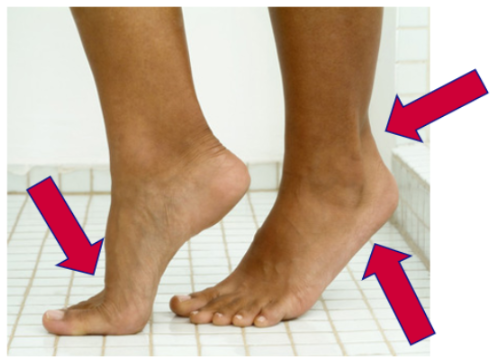
- Rise onto tiptoes over 2 seconds, lower over 3 seconds.
- Keep knees straight for gastrocnemius focus (match your slant-board stretches).
- Mild muscle fatigue is fine; sharp heel pain is a stop signal.
- Hold a wall or chair for balance — do not bounce.
Foot and arch control
Simple foot exercises can support the arch and improve control — but they are secondary to calf work and daily stretching.
- Towel scrunches — curl toes to pull a towel toward you: 2 sets of 10.
- Short foot — gently shorten the foot without curling toes, hold 5 seconds: 8–10 reps.
- Balance — stand on one leg near a support: build to 30 seconds each side.
6-week strengthening checklist
Protect your gains
Once pain settles, many people stop stretching and flare again. Keep a maintenance routine — several sessions per week — while you build strength. See Stage 2 if load management still needs attention.